Tampa, Florida
Saturday night I had the pleasure of trying Kosen — a one-Michelin-Star Japanese-inspired restaurant here in Tampa. Ironically, it sits two or three doors down from Rocca, the one-star Italian restaurant I reviewed not long ago and found inconsistent. Unlike Rocca, Kosen earned its star wholeheartedly. Bear with me — there is a lot to cover.
The Format
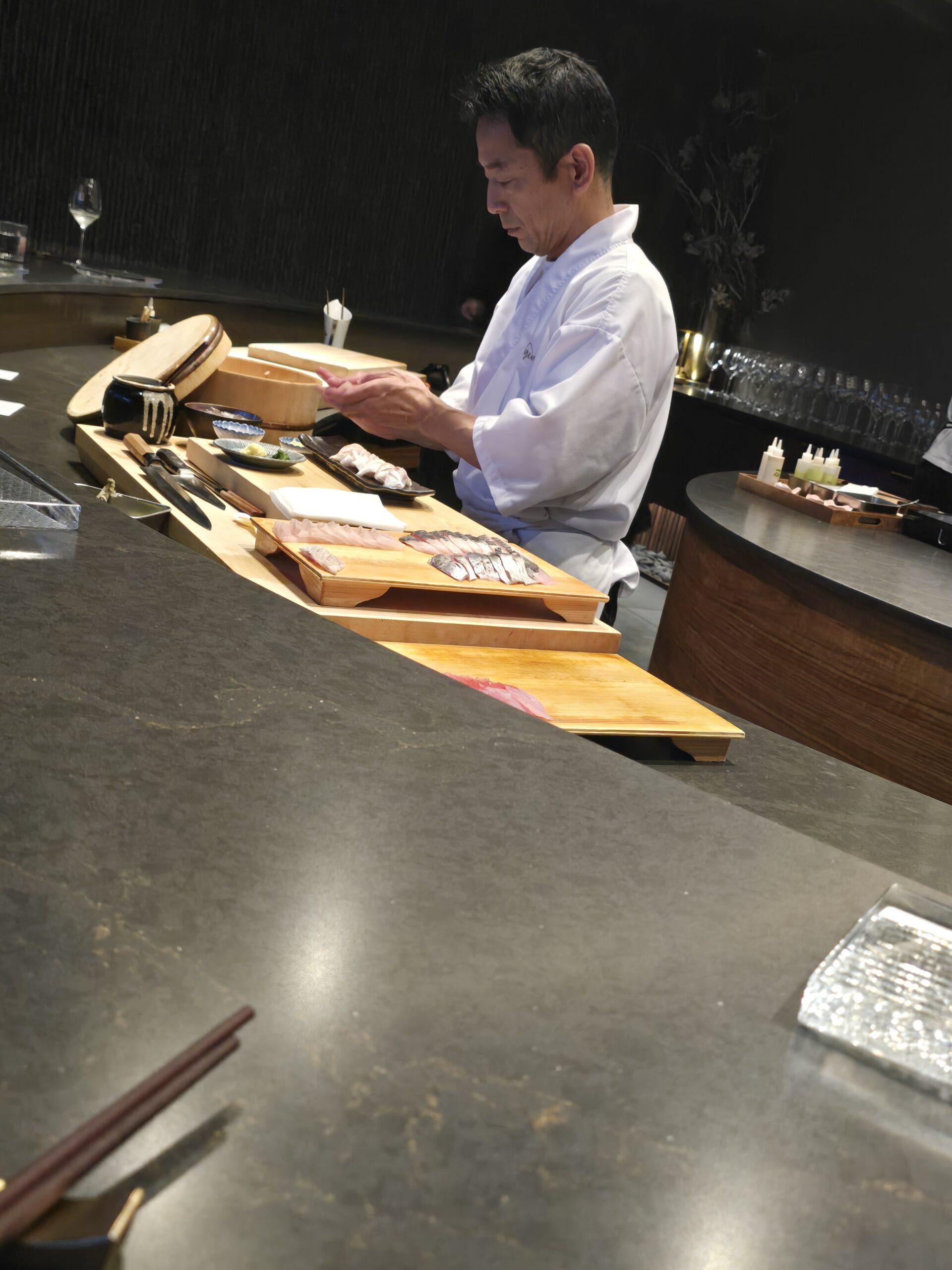
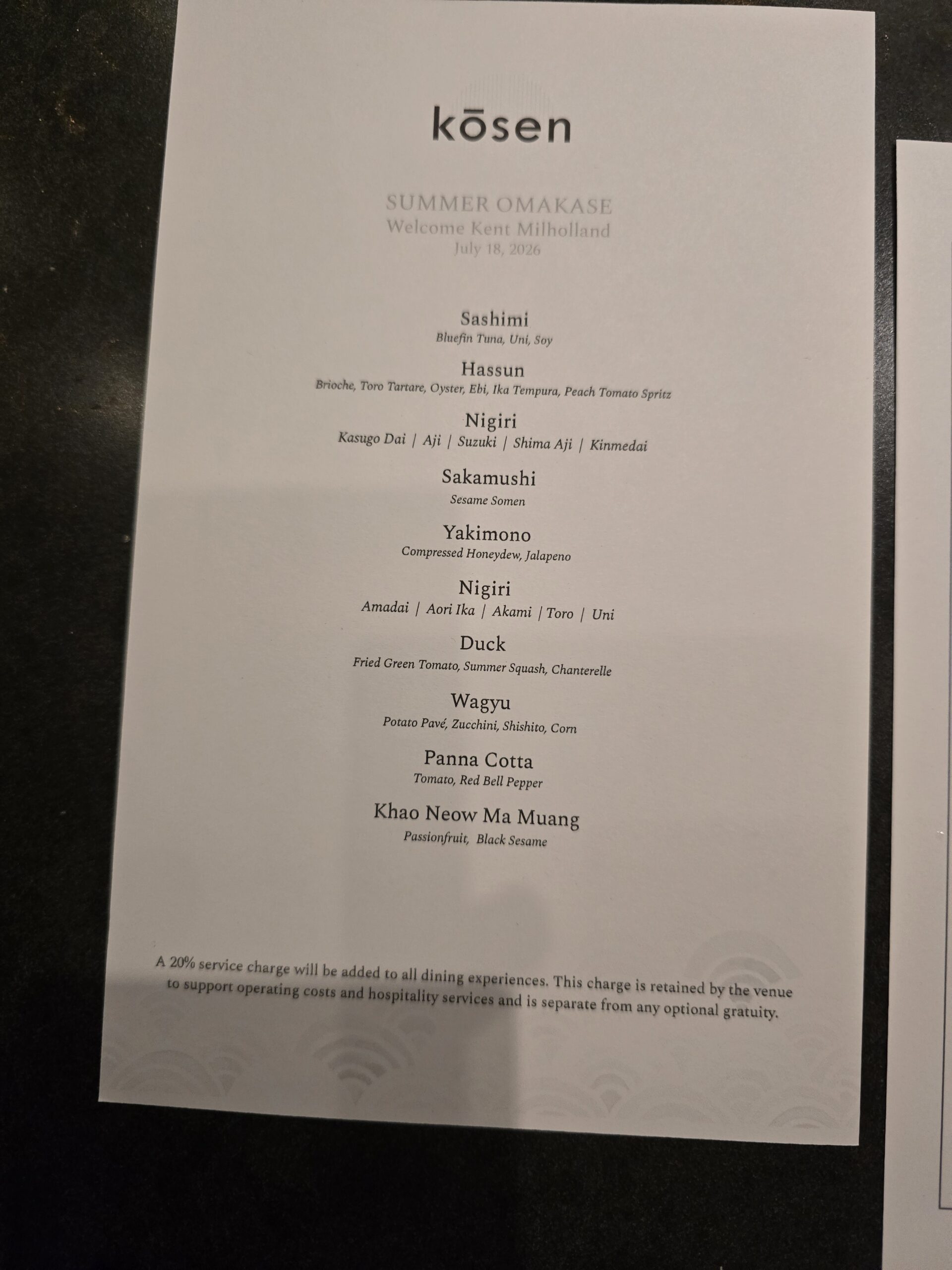
Dinner is served Omakase, in a dedicated room where you sit at a counter alongside seven to eleven other guests. A nice touch: the printed menu waiting at each seat was personalized — mine read “Summer Omakase, Welcome Kent Milholland.” Omakase translates from Japanese as “I trust you, chef.” The menu is predesigned; in true Omakase fashion, the chef makes every decision for you. At Kosen, those decisions were excellent, start to finish.
The Nonalcoholic Pairing
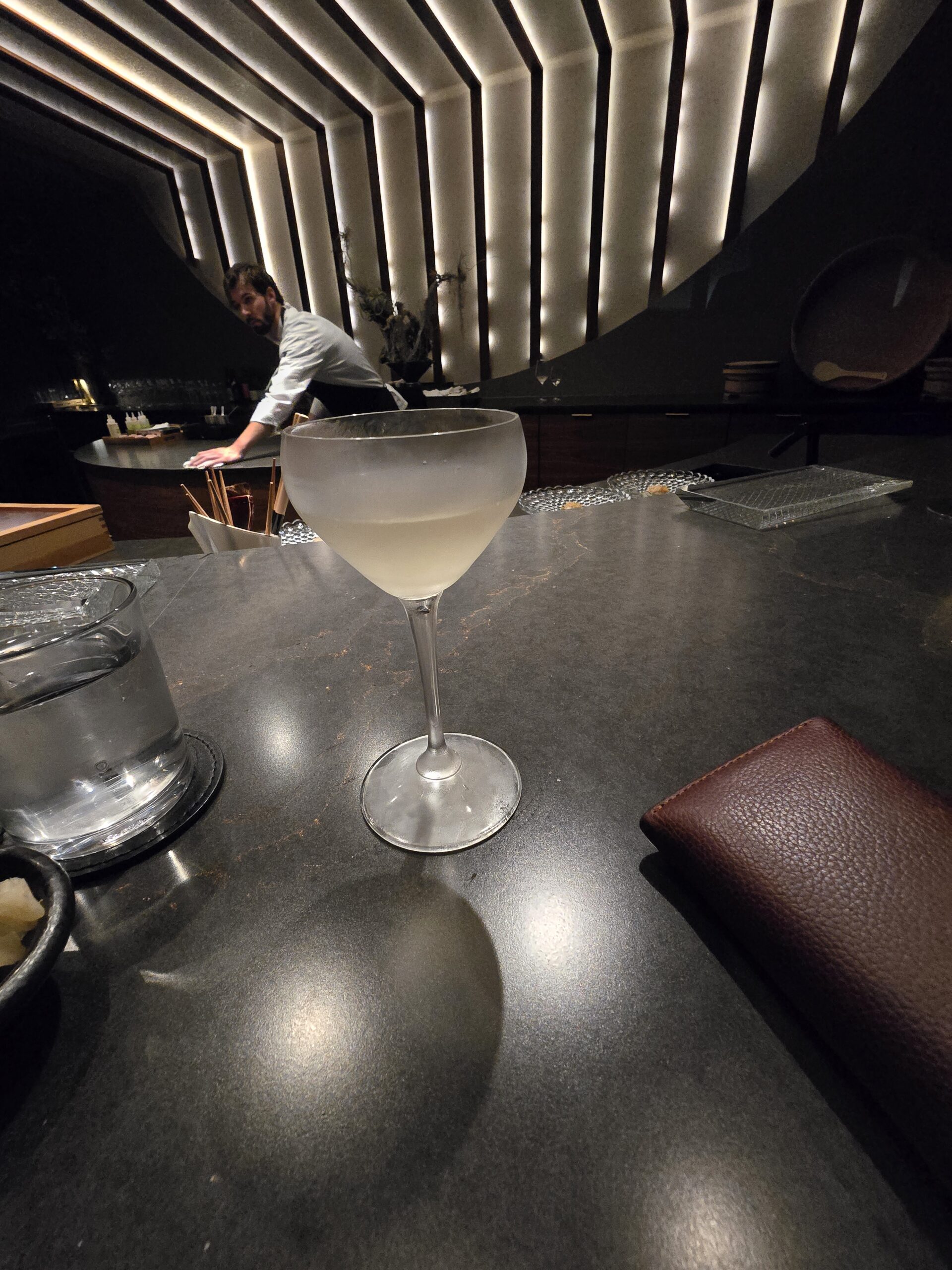
Kosen is known for its sake, wine, and cocktail program — but it’s equally serious about nonalcoholic drinks, which is rare. At most restaurants, asking for something alcohol-free gets you a token nonalcoholic beer or a spirit-free riff on a cocktail, treated as an afterthought. Not at Kosen. This is, without question, the best alcohol-free drink program I have ever encountered at a restaurant.
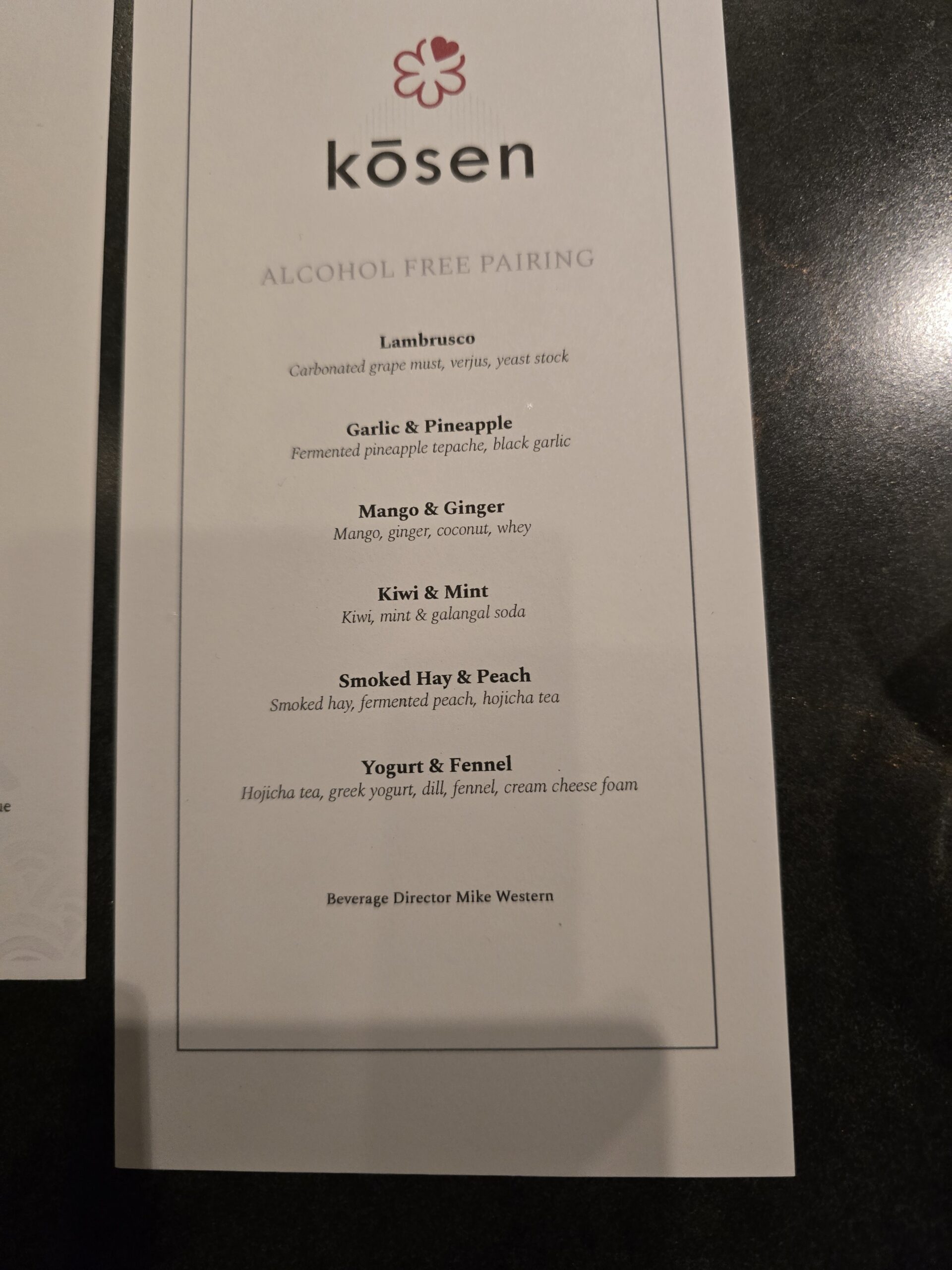
I opted for the nonalcoholic pairing, which meant a full flight of drinks that looked — and performed — like proper cocktails. The whole program is the work of Beverage Director Mike Western, and it shows.
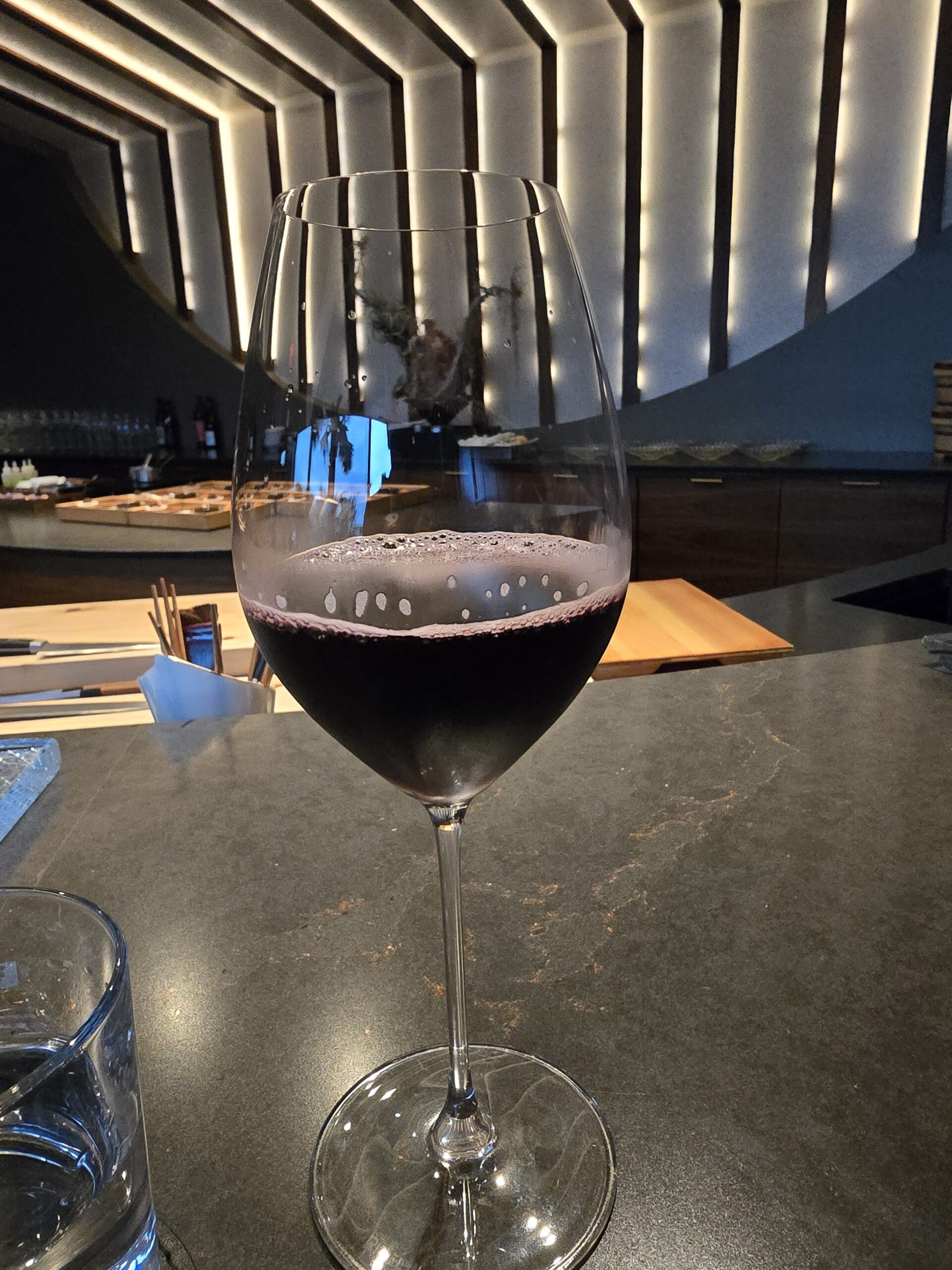
Lambrusco opened the night: carbonated grape must, verjus, and yeast stock. Lightly fermented, negligible alcohol, drinking like a not-too-sweet dessert wine — and setting the tone for a theme that carried through the whole evening: balance.
Garlic & Pineapple came next — fermented pineapple tepache with black garlic, the garlic offsetting the fruit’s sweetness with something savory and deep.
Mango & Ginger followed the same formula — mango, ginger, coconut, and whey — fruit sweetness balanced against a savory, slightly funky depth from the whey and ginger.
Kiwi & Mint — kiwi, mint, and galangal soda — arrived at exactly the right moment mid-meal. A burst of mint that reset the palate perfectly, with galangal adding a subtle spiced edge underneath. The timing was as good as the drink itself. I could have had several of these.
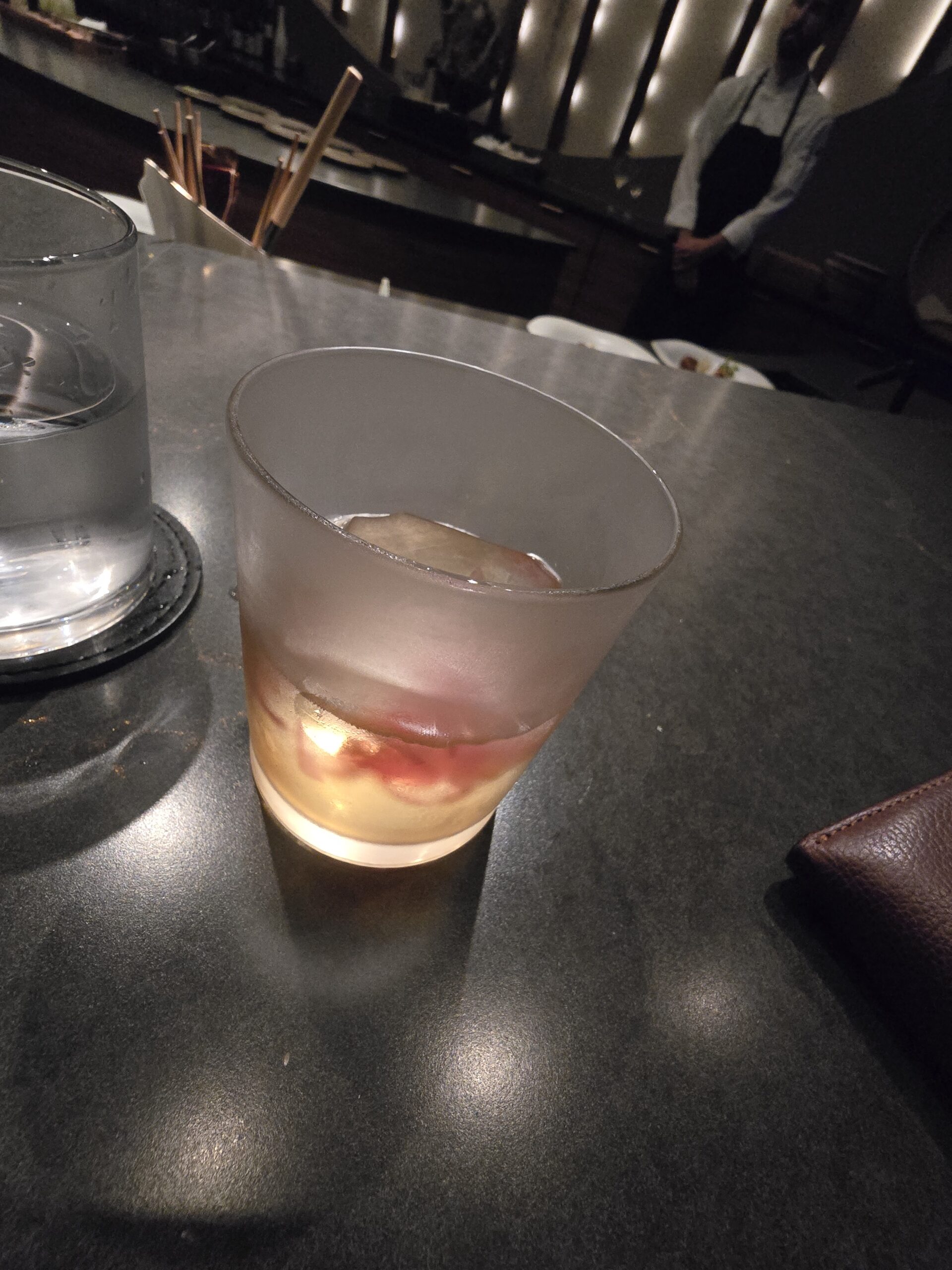
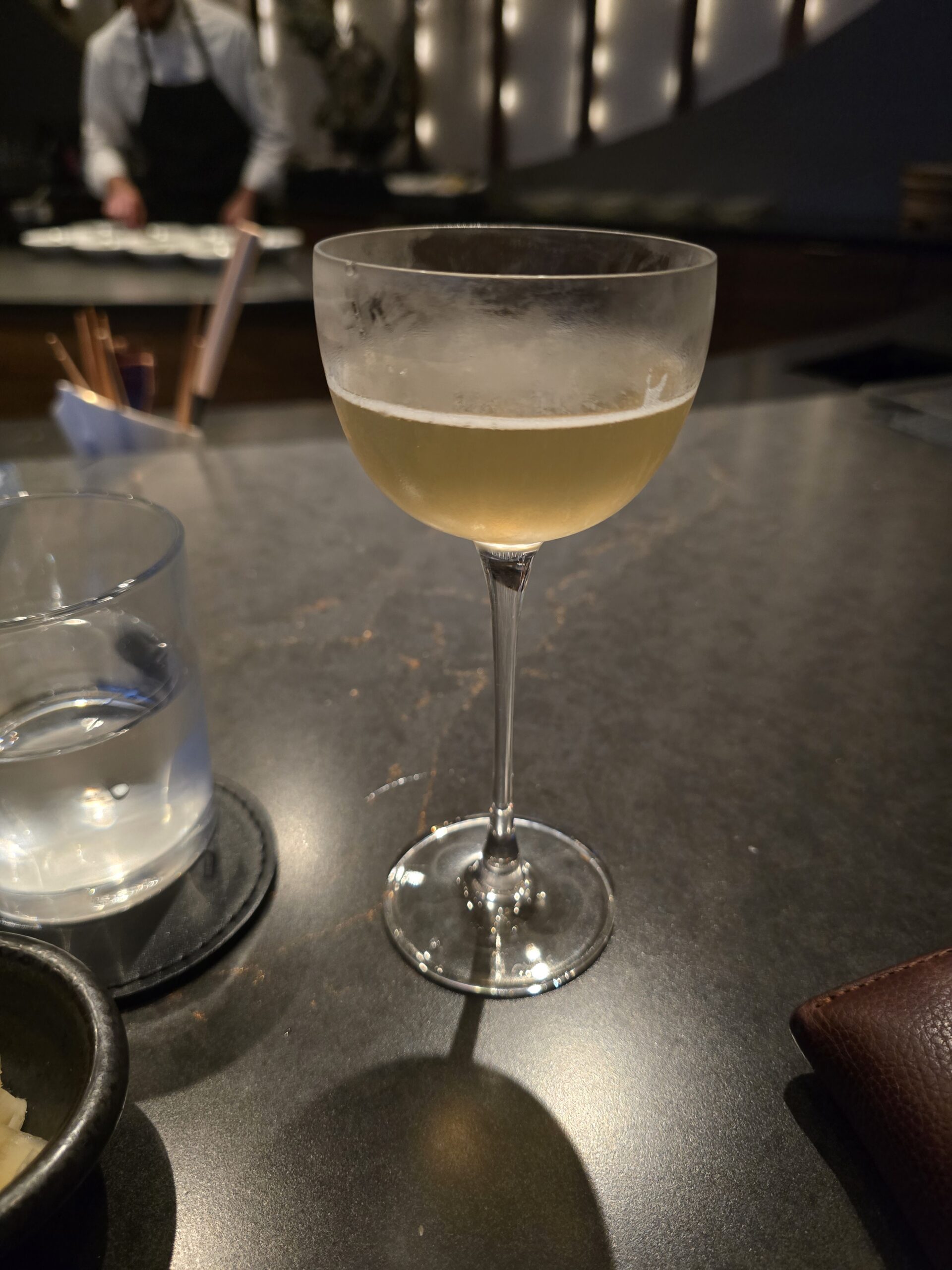
The signature drink of the night was the Smoked Hay & Peach — smoked hay, fermented peach, and hojicha tea. I’m not generally a fan of smoked drinks; most cocktail bars that torch wood under an inverted glass just leave you with a mouthful of campfire. This was different. The smoke integrated into the fermented peach so completely that the result was hard to categorize — not too much, not too little, somehow both at once. It looked like an old fashioned. It tasted like nothing else on the menu. I could have had several of these too.
The Sashimi
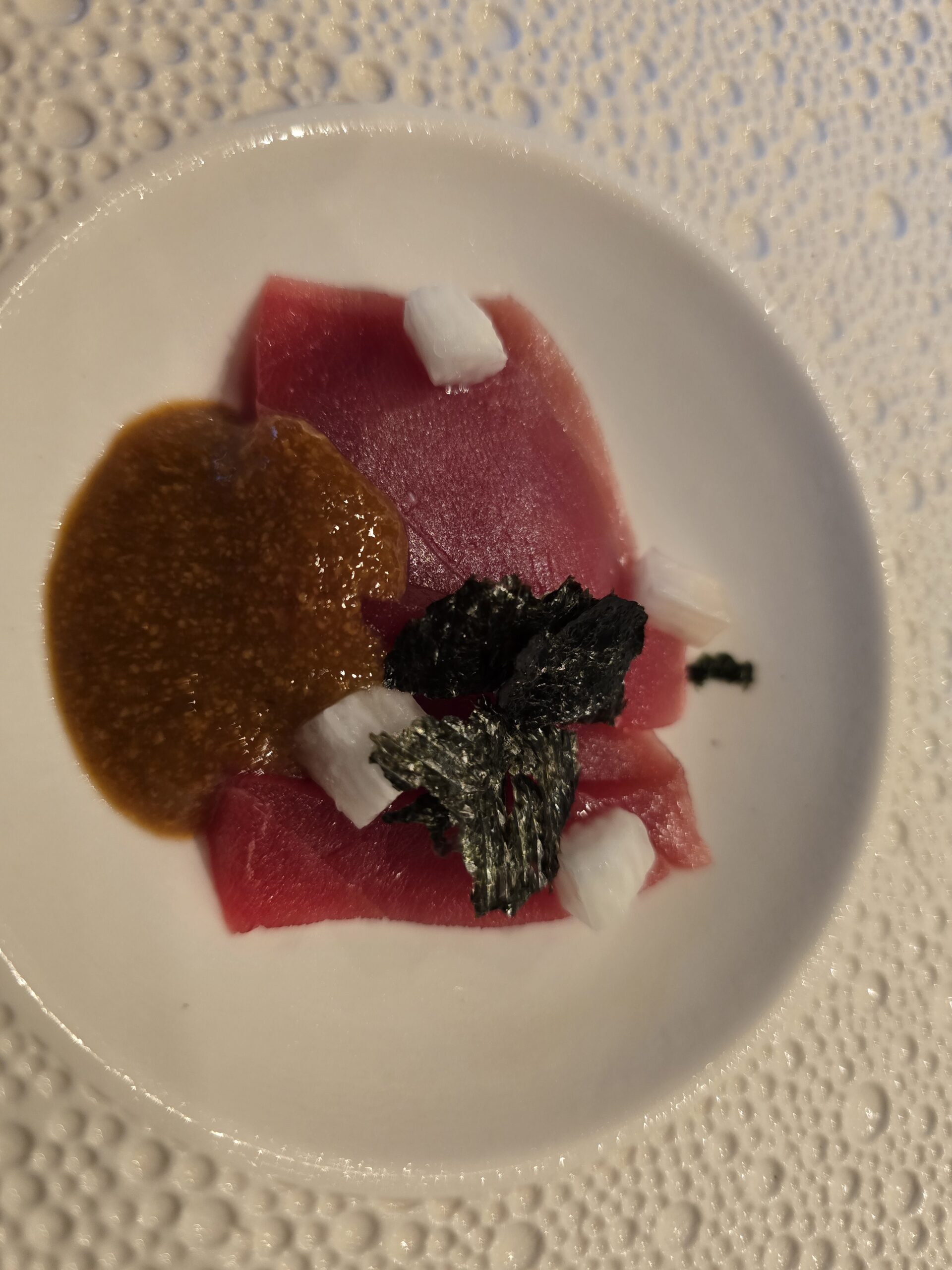
Dinner opened with a simple bluefin tuna sashimi — simple in concept, extraordinary in execution. It tasted like it had been swimming an hour earlier. Served with a touch of uni and a touch of soy, it established the evening’s real theme: restraint. The fish was fresh enough that Kosen skipped the usual mountain of wasabi and bowl of soy sauce entirely. The chef seasoned each piece exactly as he intended it to be eaten, and you simply ate it as served.
The Hassun
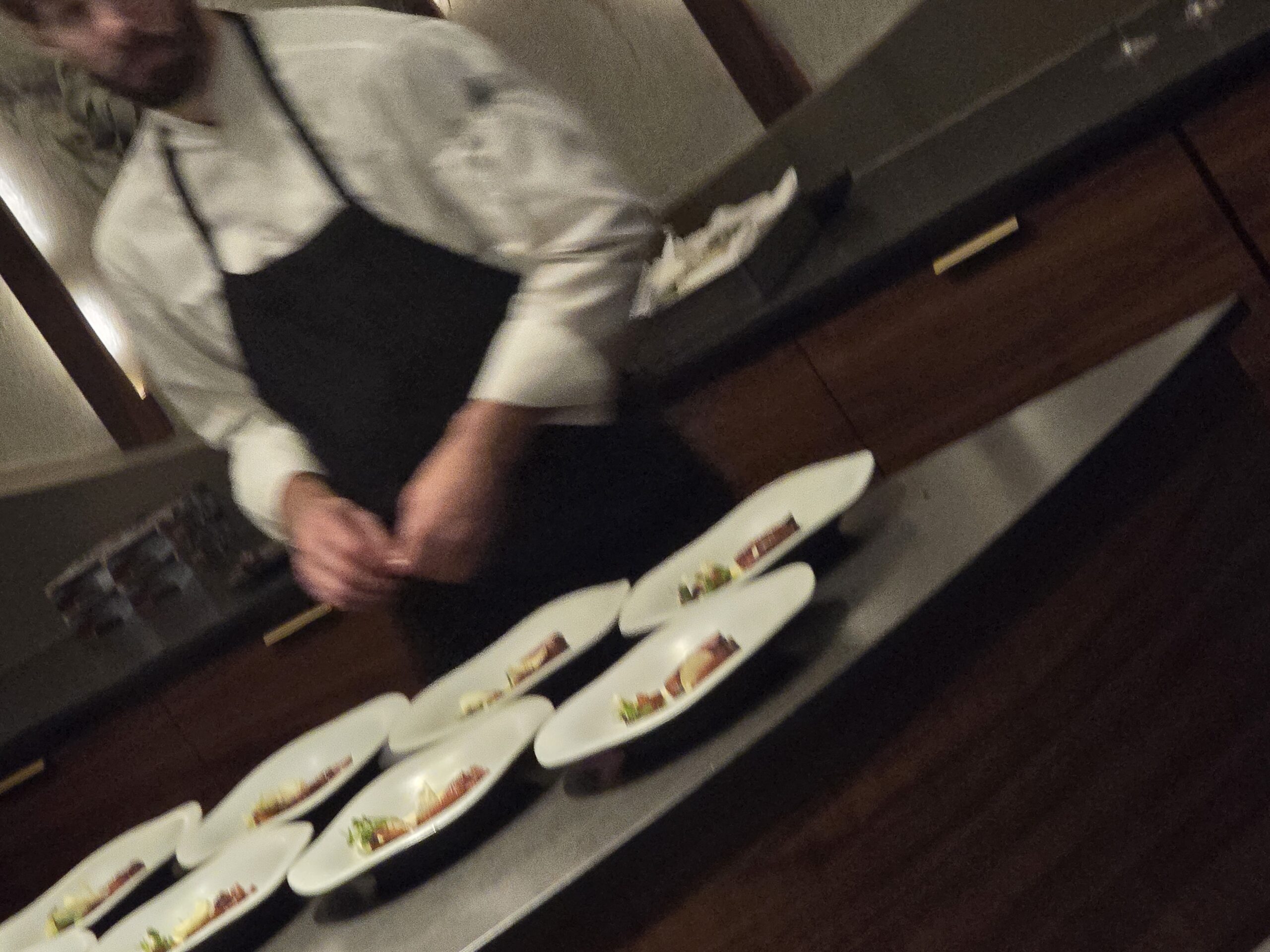
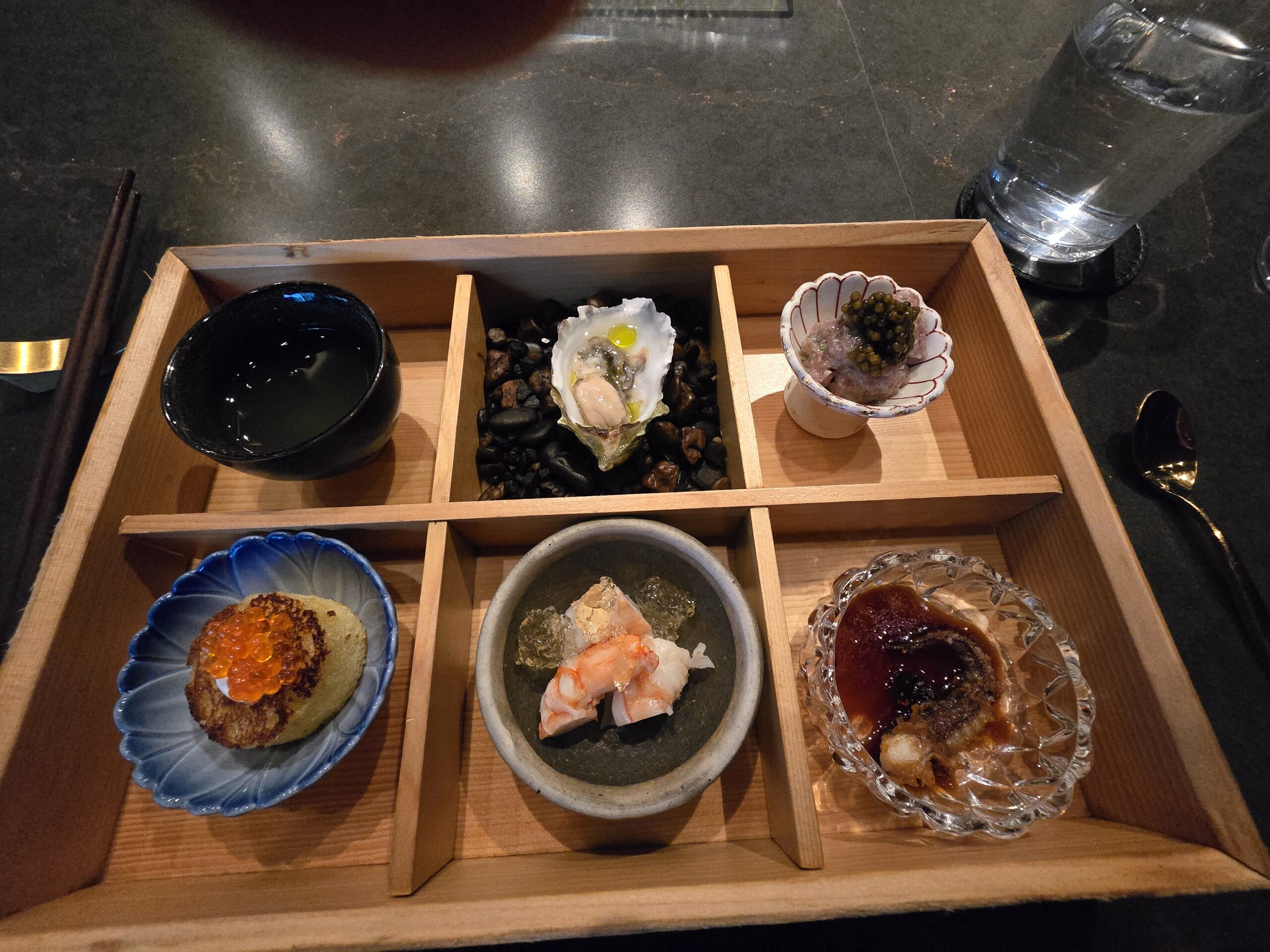
Next came the Hassun — six small bites arranged on a single plate: Brioche, Toro Tartare, Oyster, Ebi, Ika Tempura, and a Peach Tomato Spritz. Each was one or two bites at most.
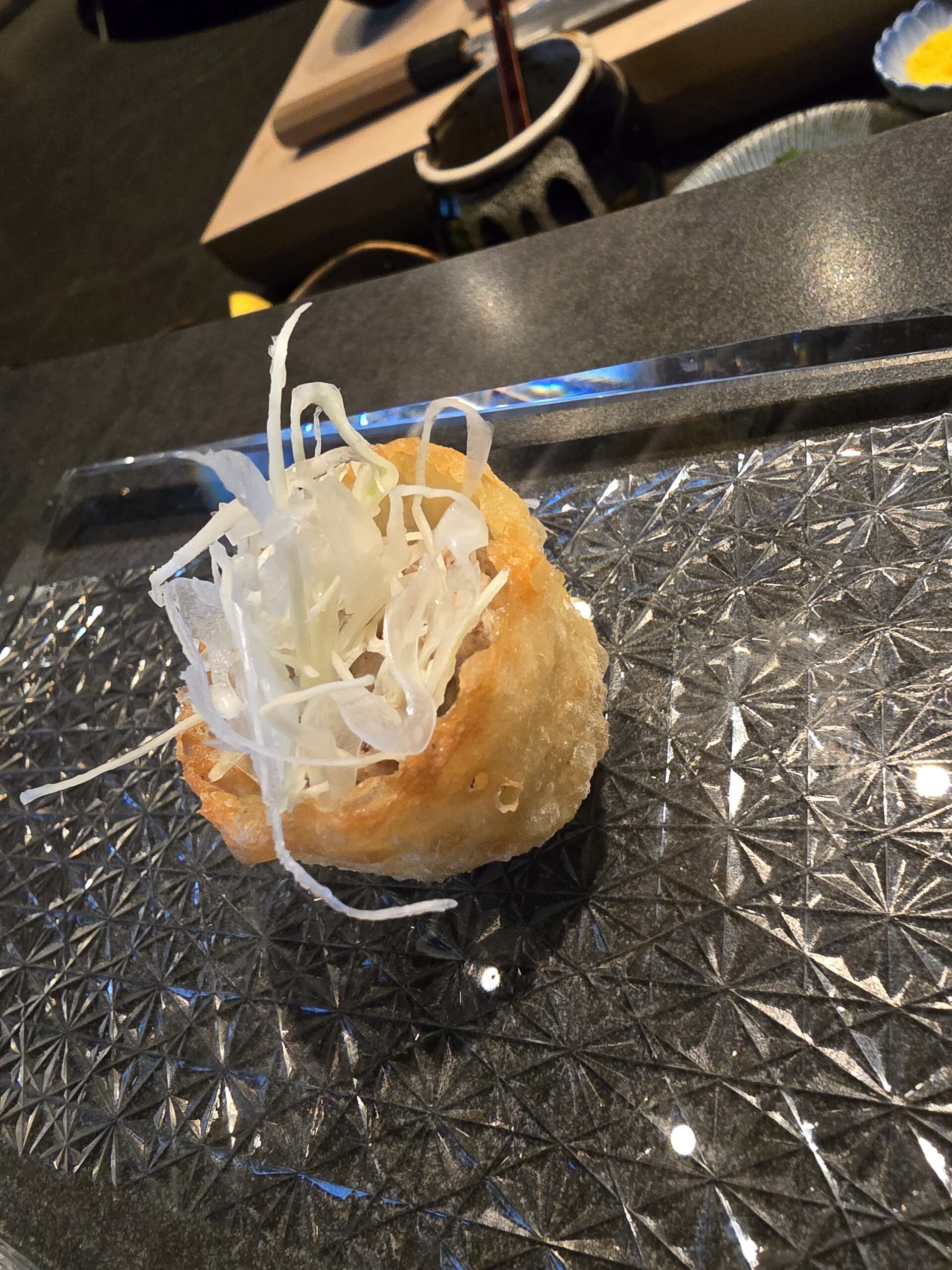
– The Peach Tomato Spritz — a simpler cousin of the cocktail served later — opened the plate to cleanse the palate – A single Oyster (possibly royal or emperor), impeccably fresh with a light touch of oil – Toro Tartare — ground toro topped with Beluga caviar, high quality enough that even caviar skeptics would likely come around – Brioche with fish eggs on top, light and clearly showing the French training of the restaurant’s second chef – A perfectly cooked Ebi (shrimp), served with a house-made infused jelly — pulverized and built from scratch in the kitchen, sweet and savory at once – Ika Tempura — squid with a potent soy sauce, the one genuinely bold flavor of the set. Not my favorite bite on the plate, but its intensity made me appreciate the restraint of everything around it
The Nigiri
Most Americans, hearing “sushi,” picture the rolled variety — rice seasoned with vinegar and sugar, wrapped around seafood and vegetables, sliced into rounds. It’s the most common form in the US precisely because the rice softens the experience of raw fish for a mainstream palate. I’ve eaten plenty of it over the years and enjoy it when it’s fresh.
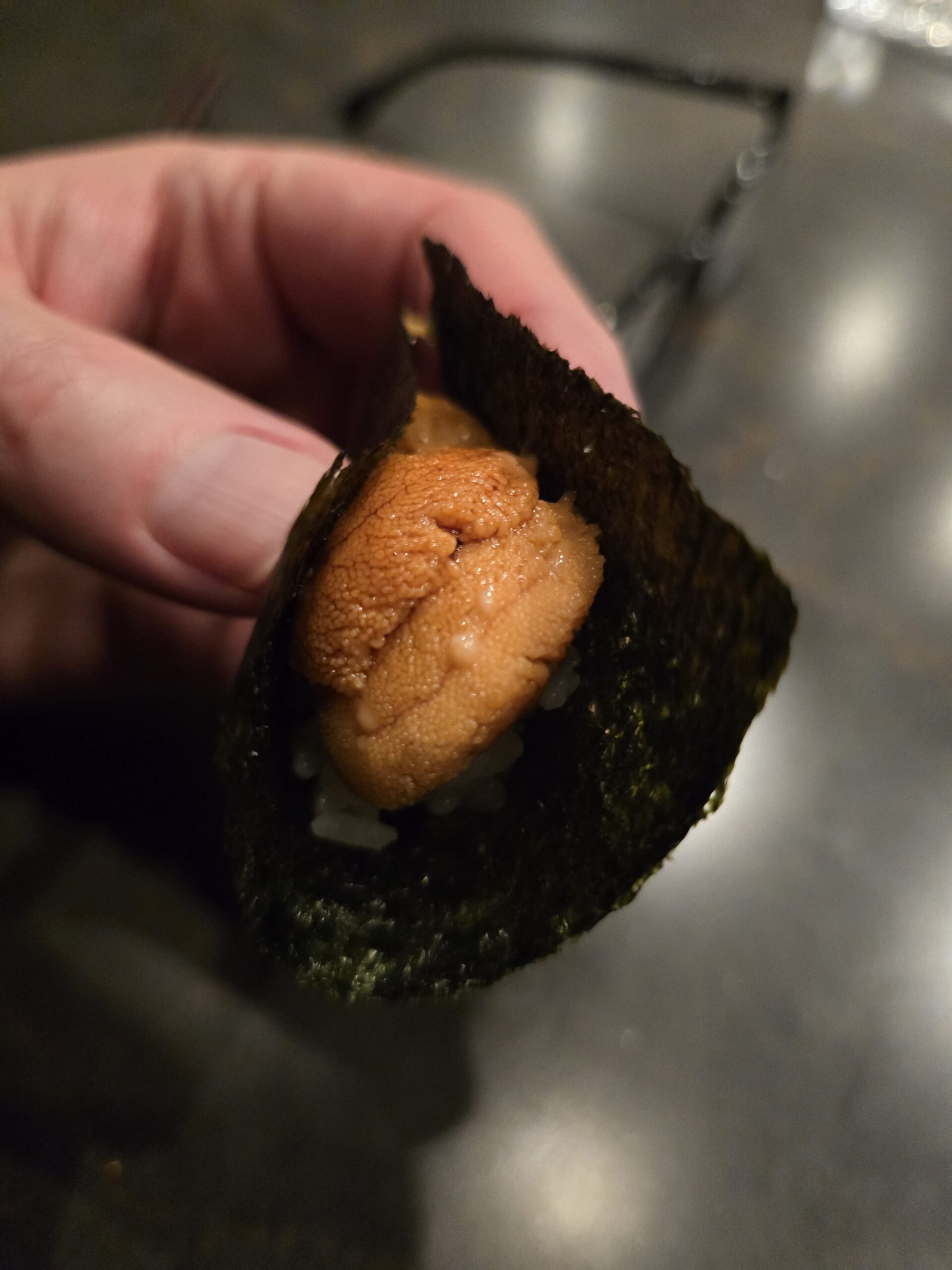
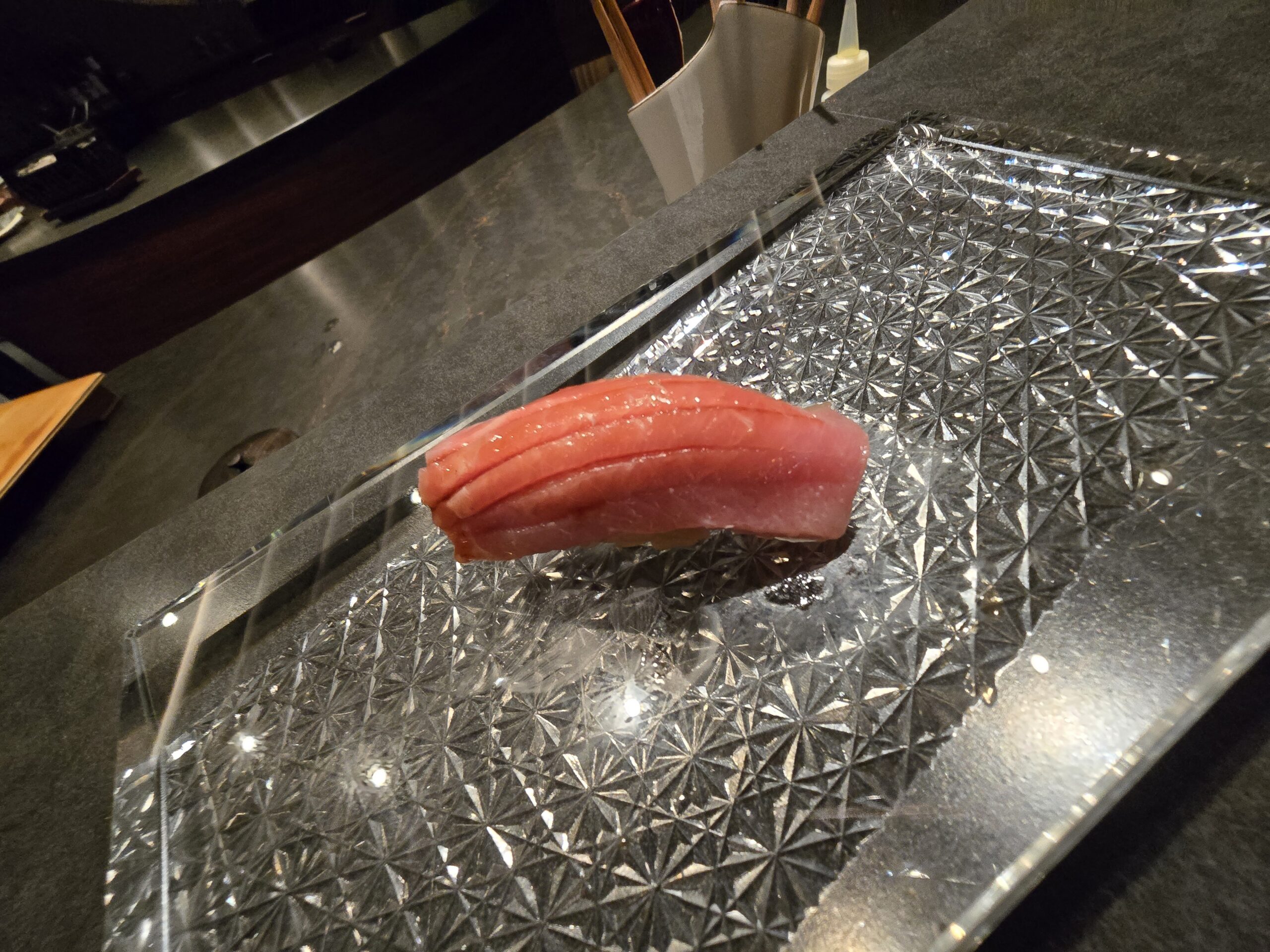
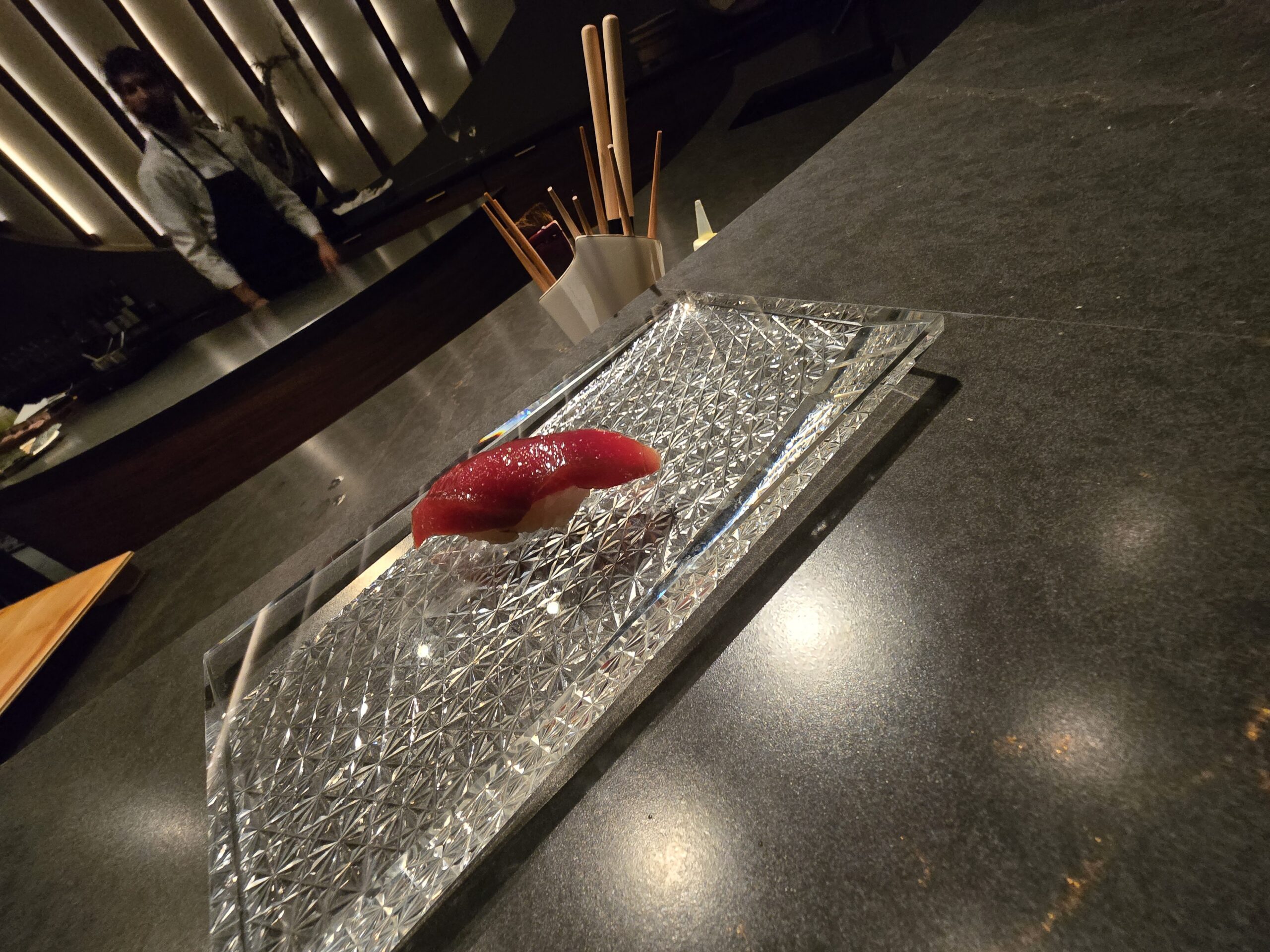
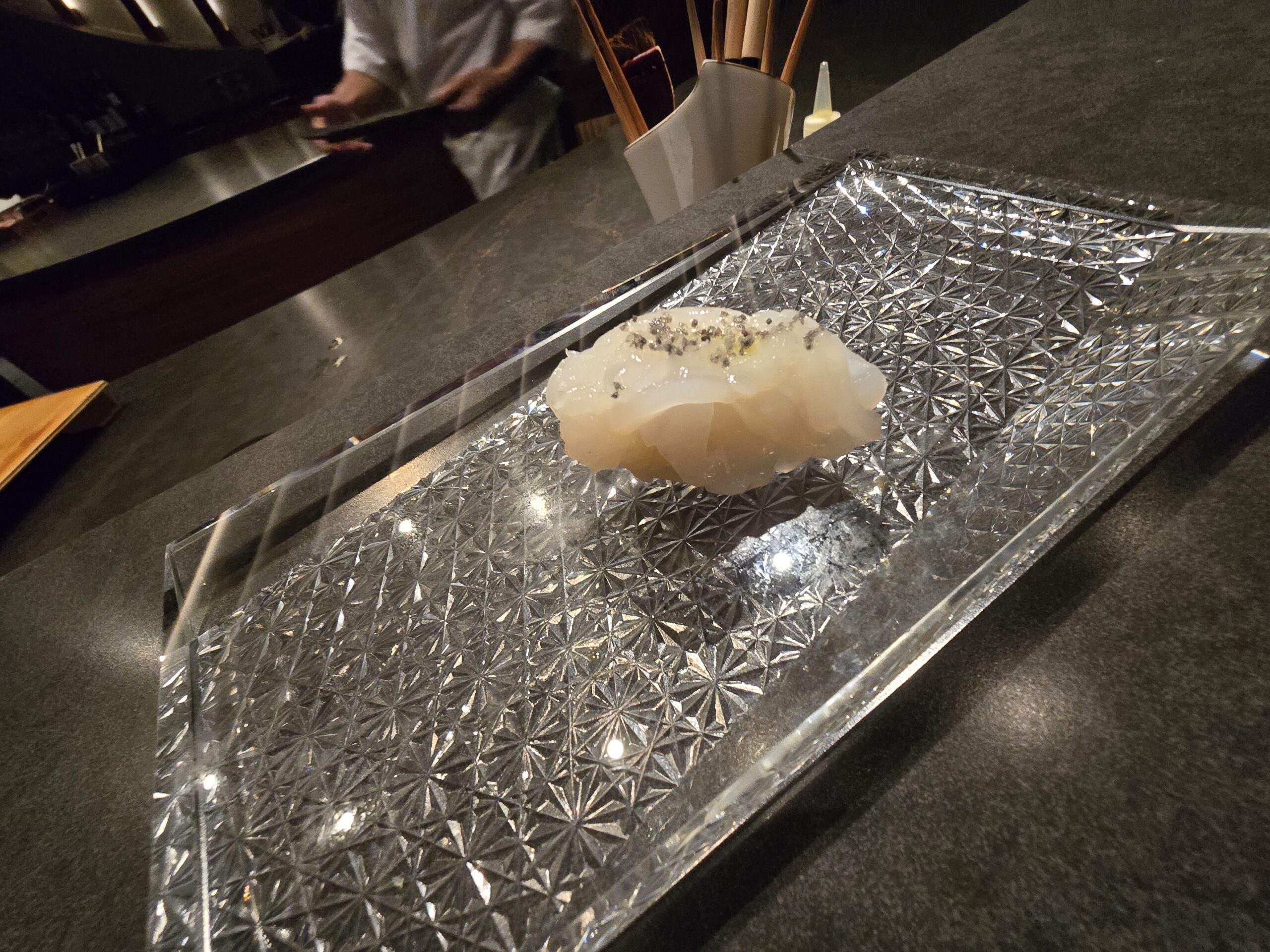
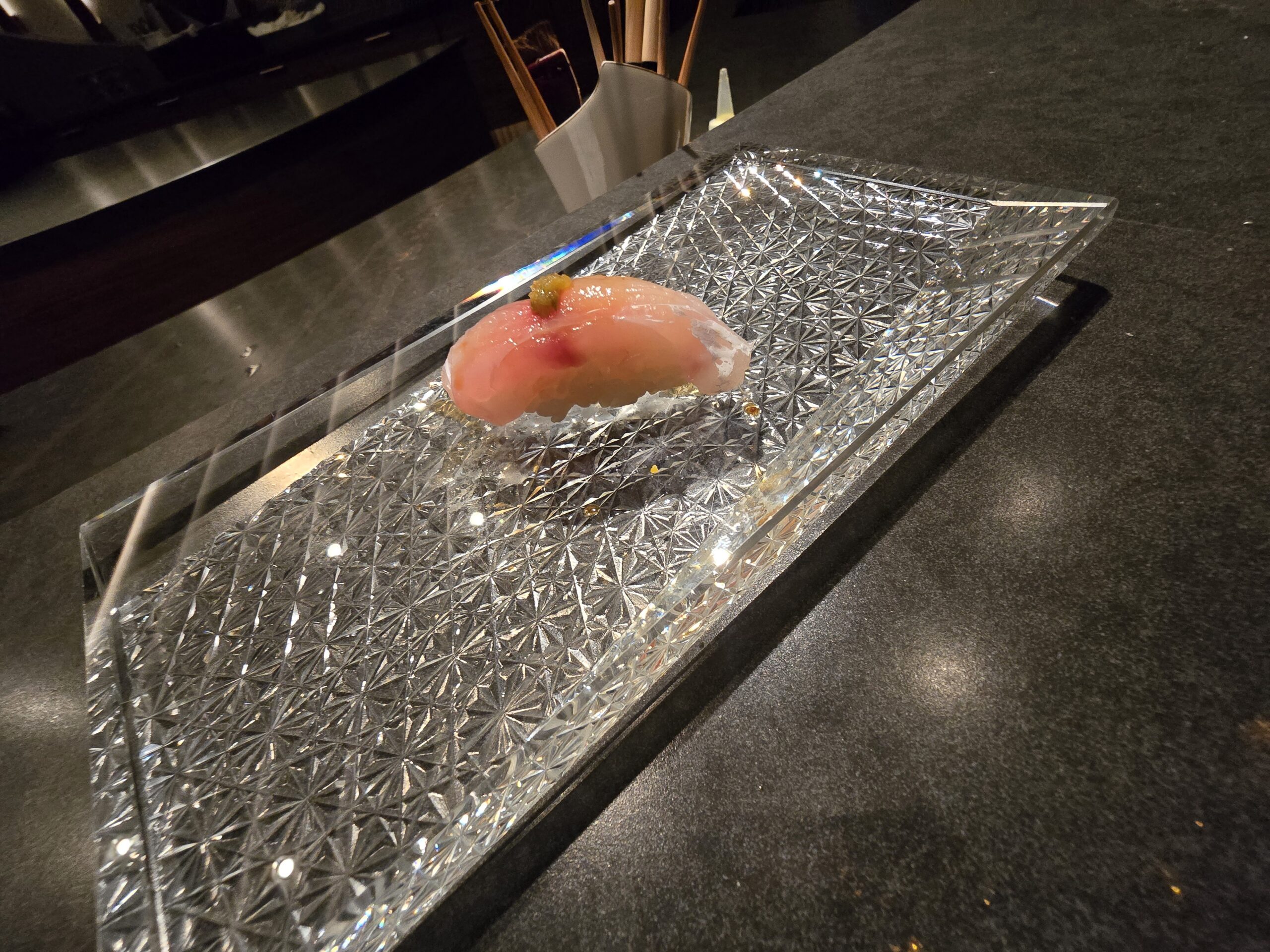
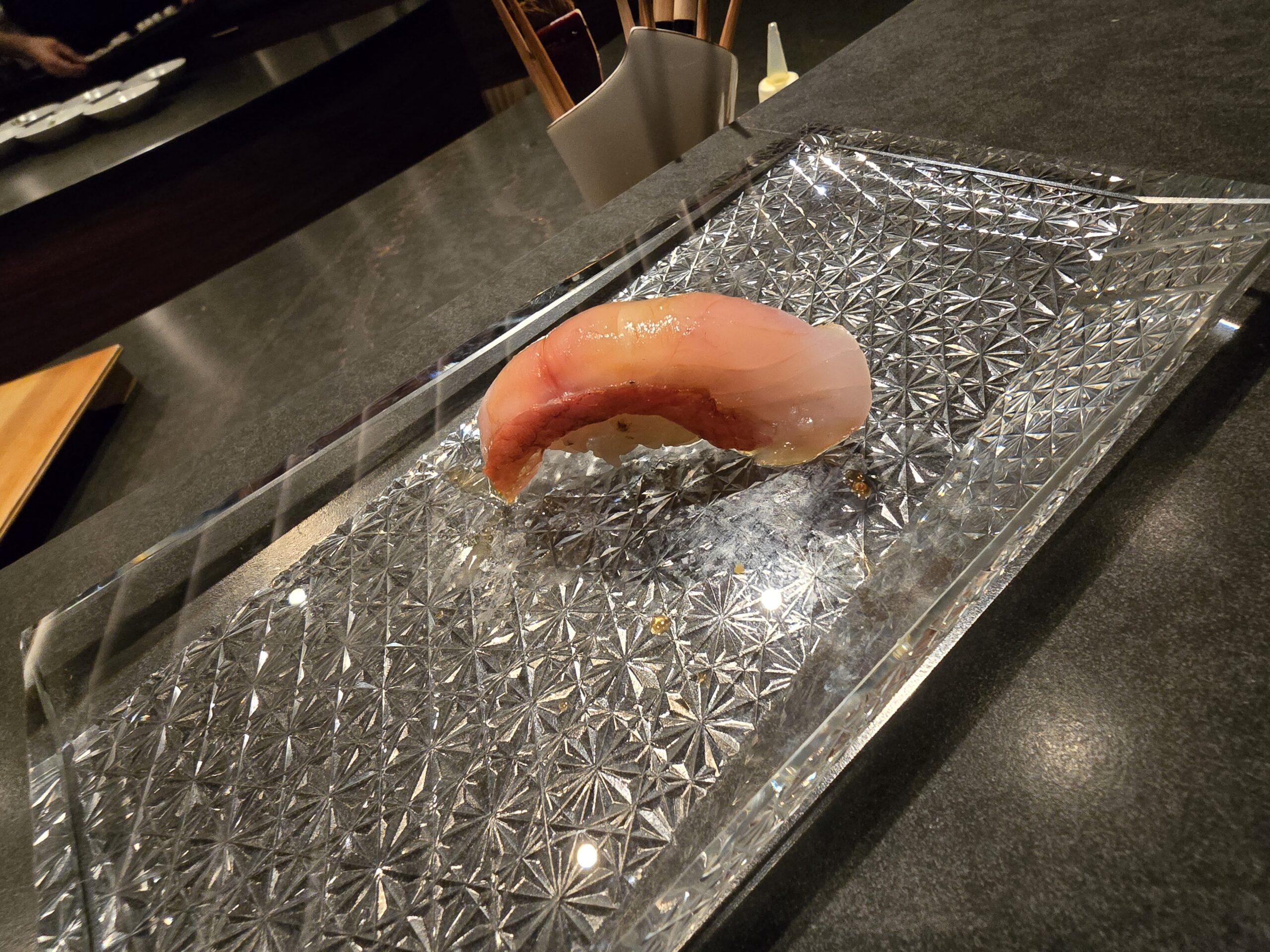
But nigiri, done well, is my favorite. A small hand-pressed mound of vinegared rice, wrapped in seafood — traditionally salmon, tuna, shrimp, or eel, though Kosen’s range went well beyond that — finished with a touch of wasabi and a light basting of sauce. At an average sushi restaurant, nigiri can be a gamble; I usually stick to rolls at those places. Done right, it’s fish-forward in a way rolled sushi simply isn’t.
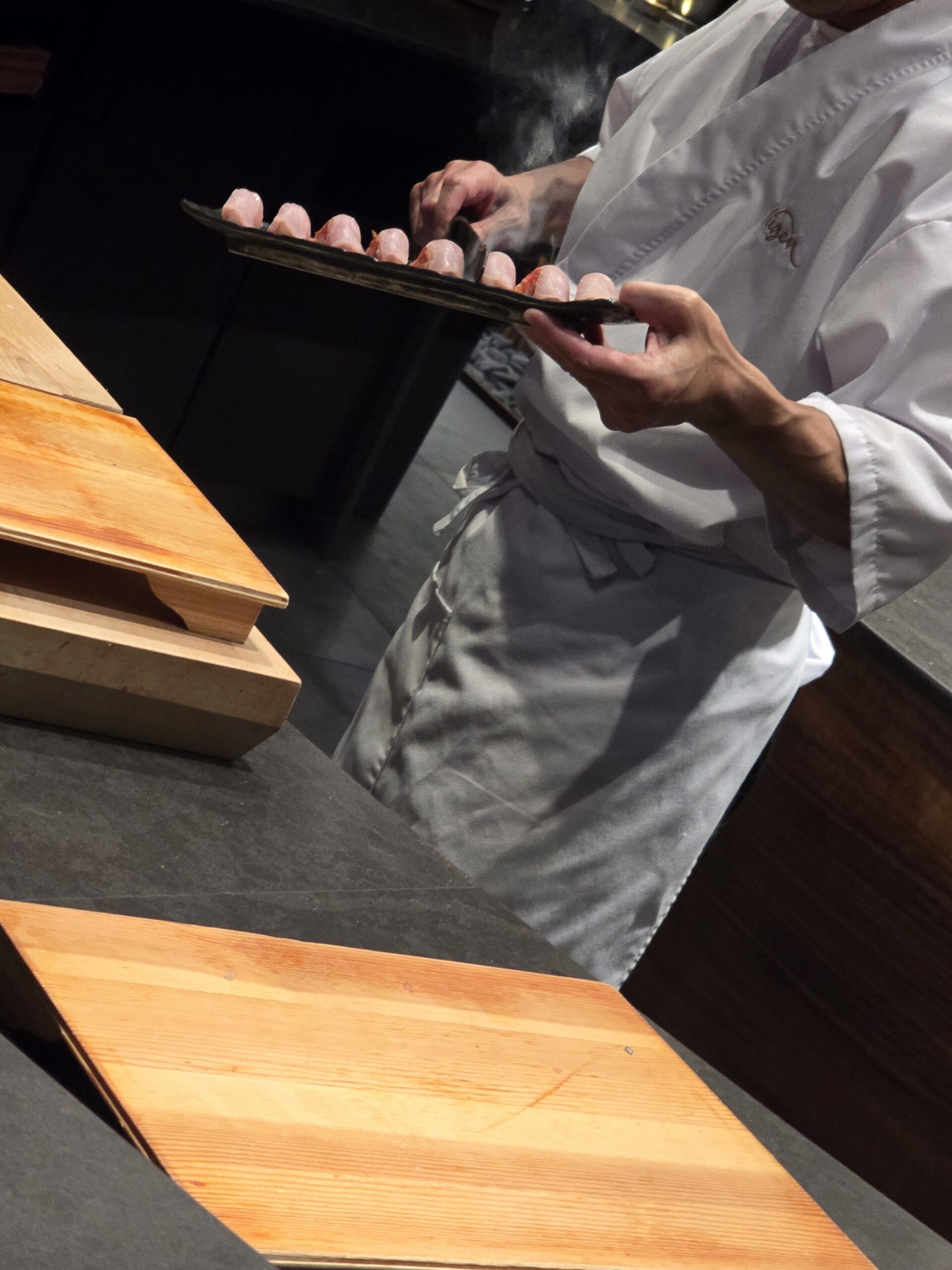
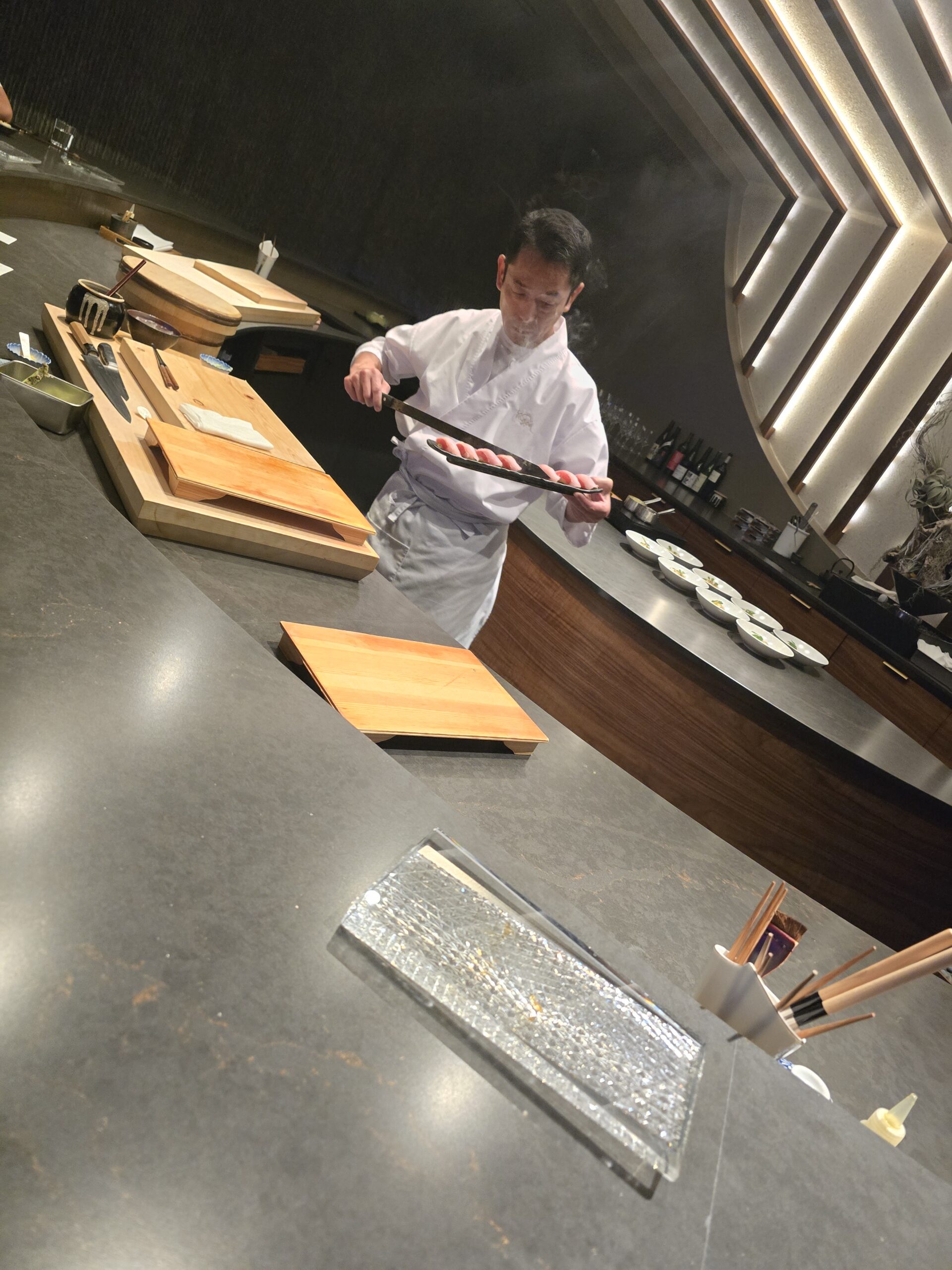
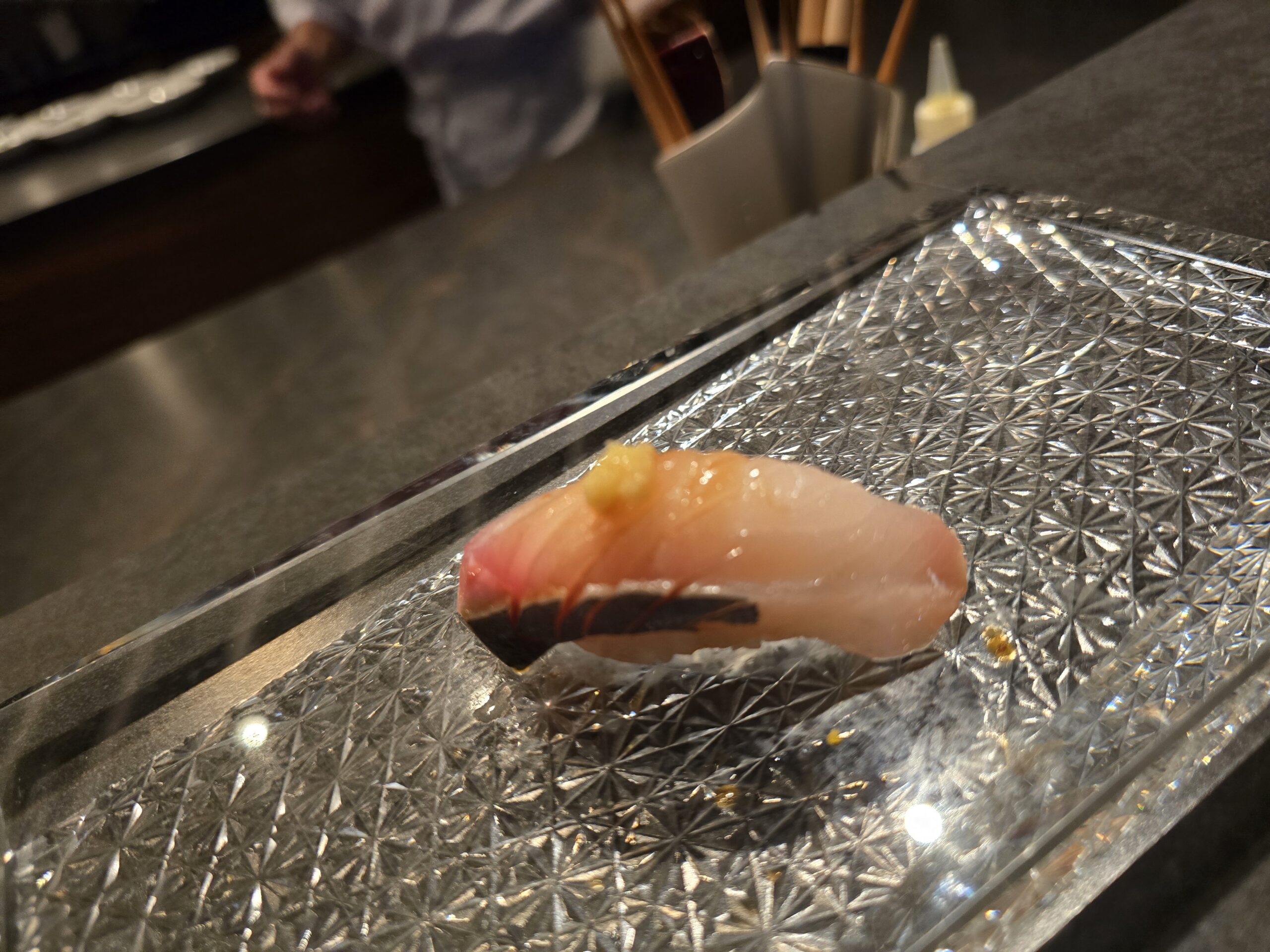
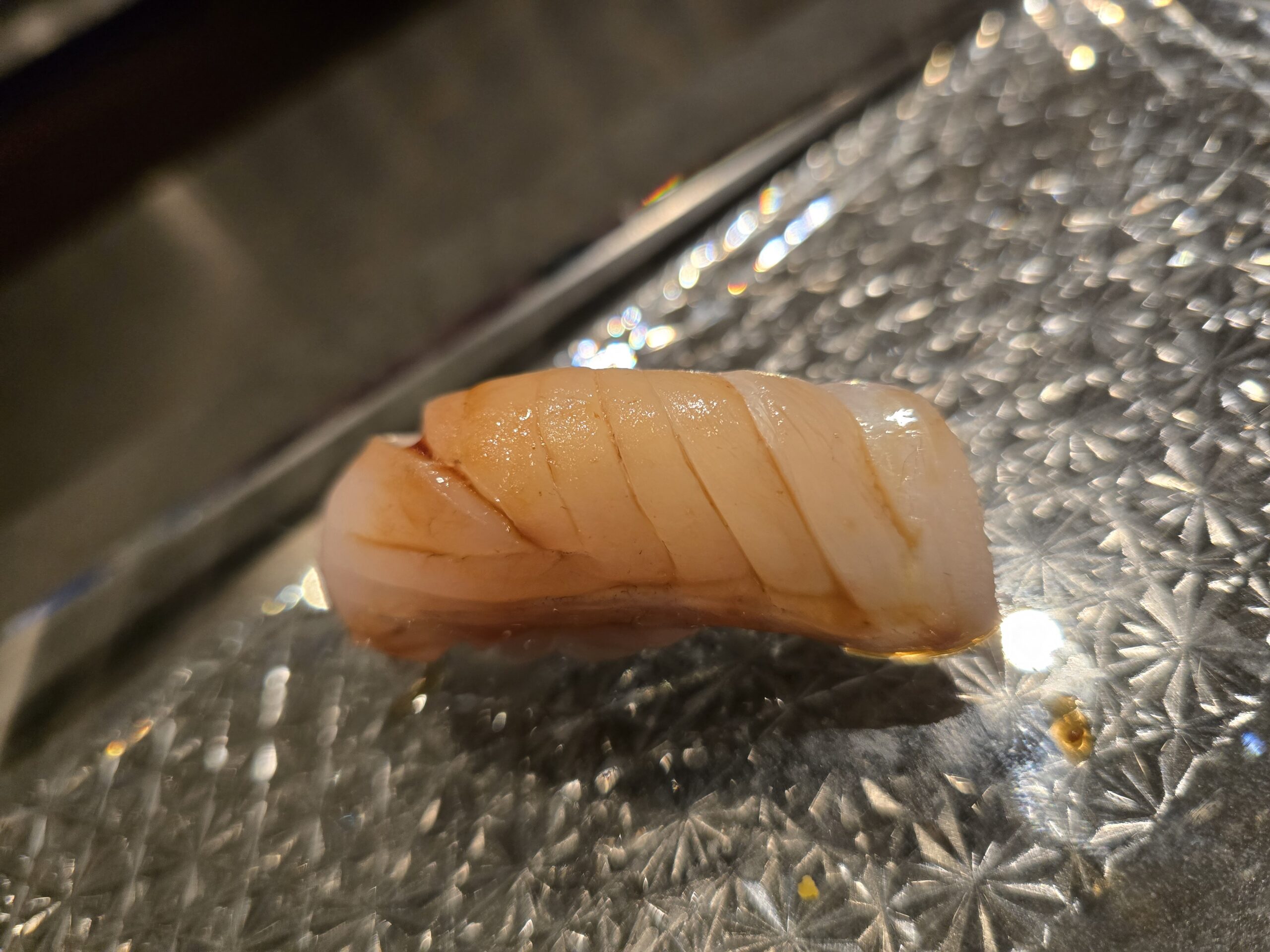
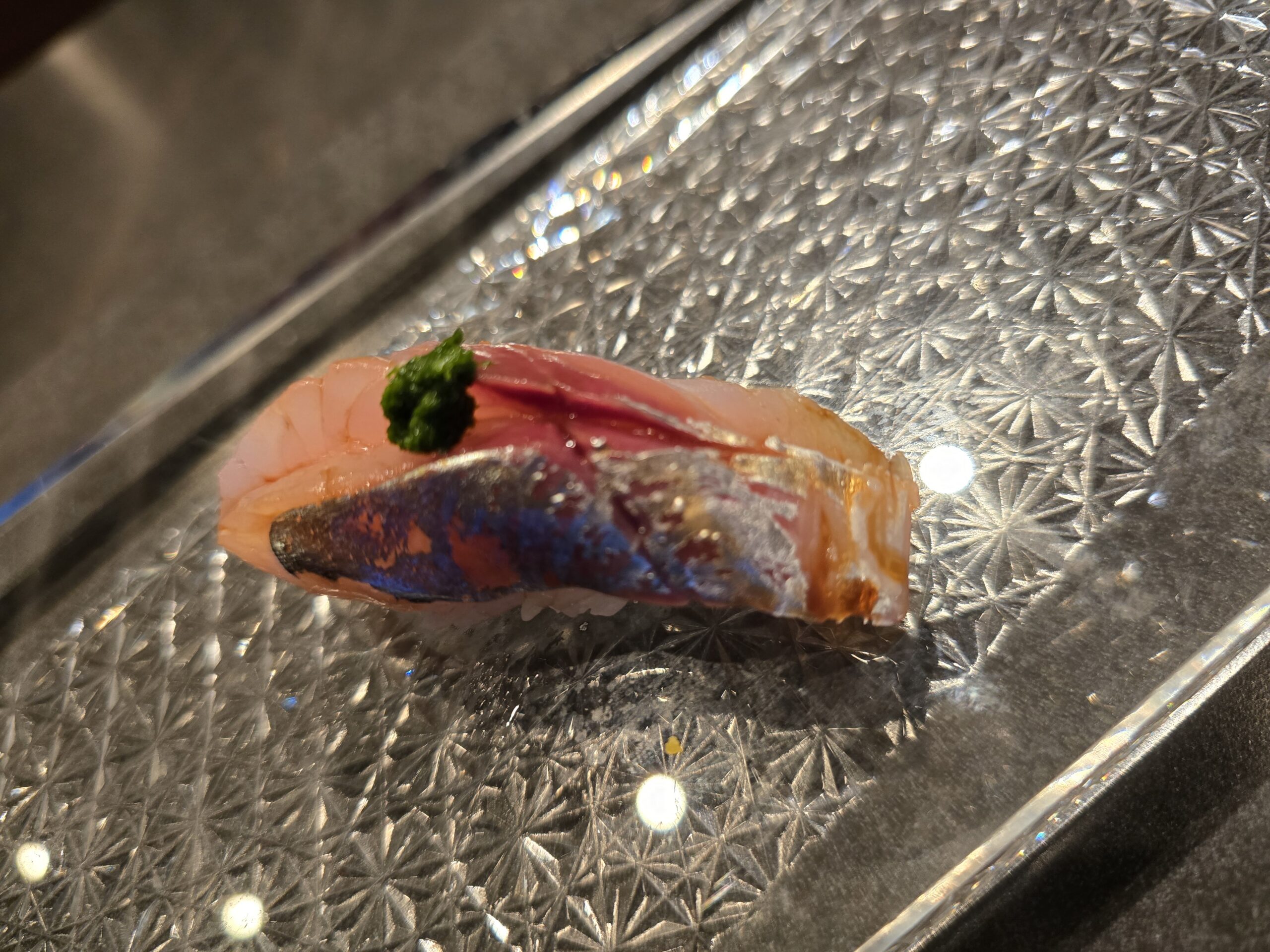
The chef served ten pieces of nigiri across two rounds over the course of the evening, one at a time, plating for the full table and distributing individually. Picking a favorite is genuinely difficult — every piece was fresh, restrained, and balanced, with any wasabi or sauce used in amounts small enough to enhance rather than announce itself. Here’s the full lineup, menu name to English:
| Menu Name | English |
|---|---|
| Kasugo Dai | Baby Red Sea Bream |
| Aji | Japanese Horse Mackerel |
| Suzuki | Japanese Sea Bass |
| Shima Aji | Striped Jack |
| Kinmedai | Golden Eye Snapper |
| Amadai | Tilefish |
| Aori Ika | Bigfin Reef Squid |
| Akami | Lean Bluefin Tuna |
| Toro | Fatty Bluefin Tuna |
| Uni | Sea Urchin |
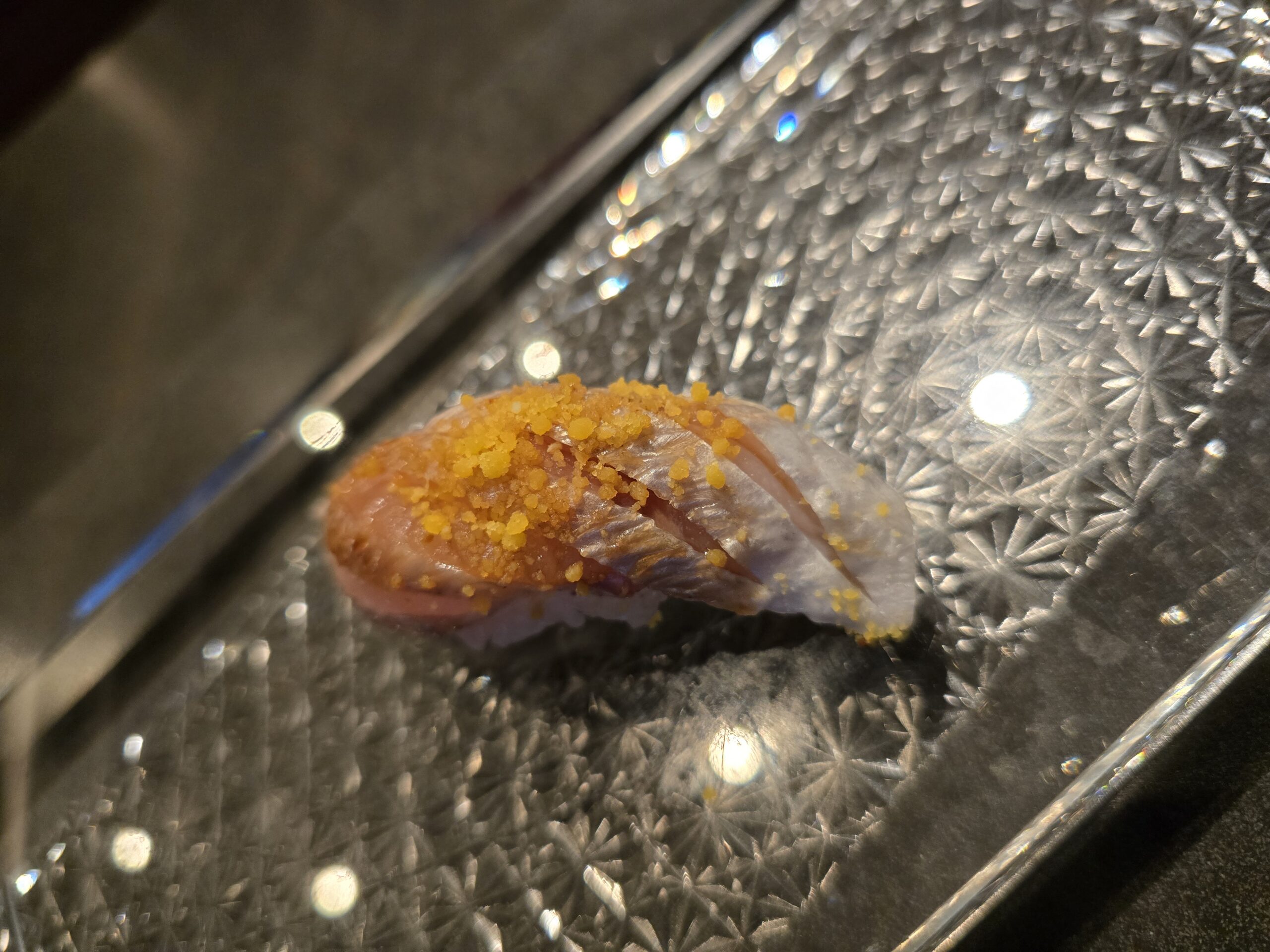
One piece broke from the pattern entirely. On what I believe was the fourth nigiri of the evening — the Shima Aji, striped jack — the second chef brought out a scorching hot flat blade after the sushi chef had already formed the piece sushi-style. He used the blade to sear just one side. Three sides of the piece stayed purely raw striped jack; the fourth picked up a light char and a slightly cooked texture. Unusual, a genuinely different take on nigiri, and a lot of fun to experience mid-meal.
The Transition
Sakamushi — sesame somen — bridged the raw courses into the cooked entrées, served as cold sesame-dressed somen noodles in a light broth. Everything about it was light: the fish, the sauce, the broth. Balance again. When a kitchen nails it, the whole meal opens up; when any one element overpowers — too much salt, too much spice, too much of anything — it flattens everything around it.
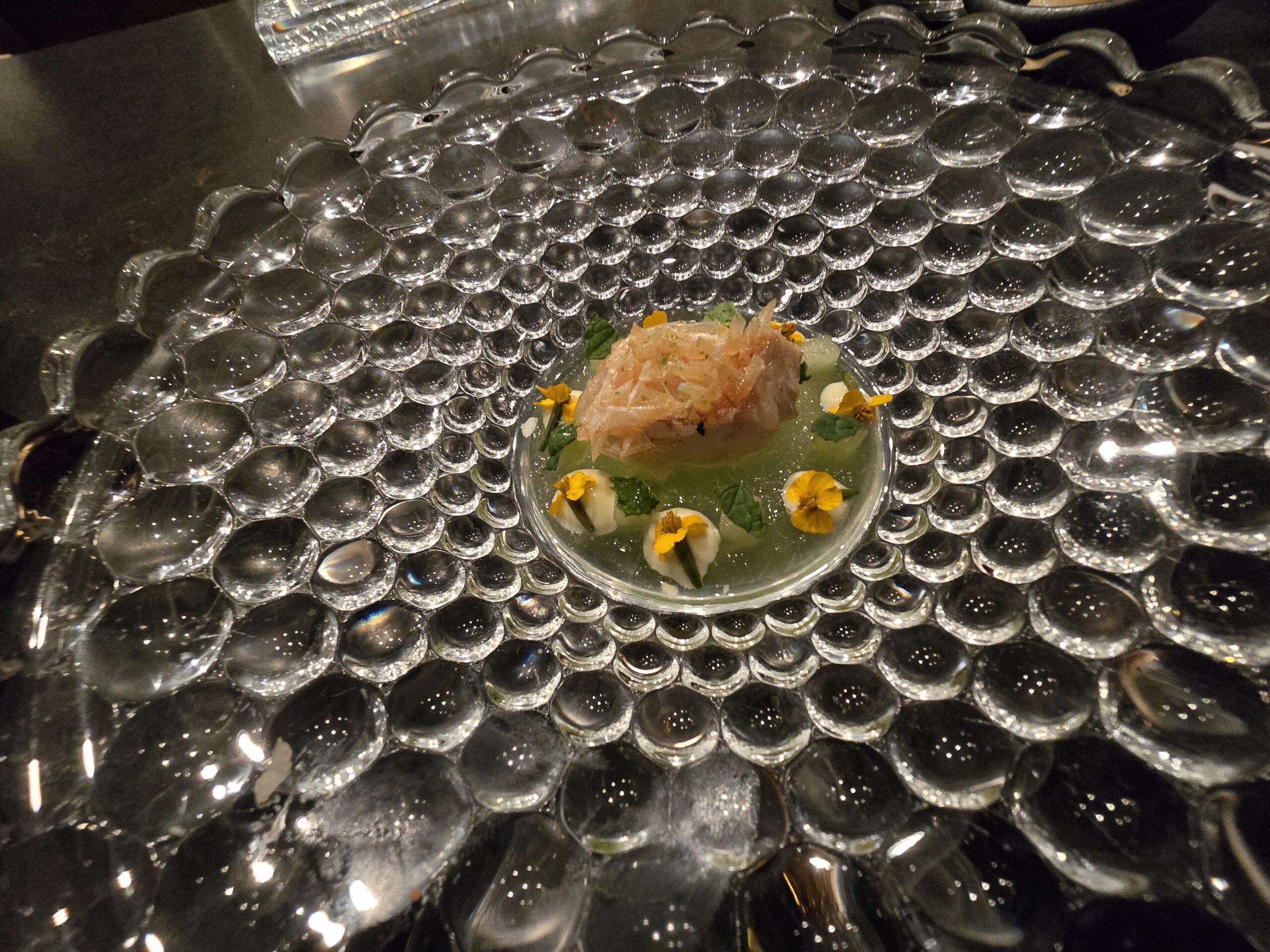
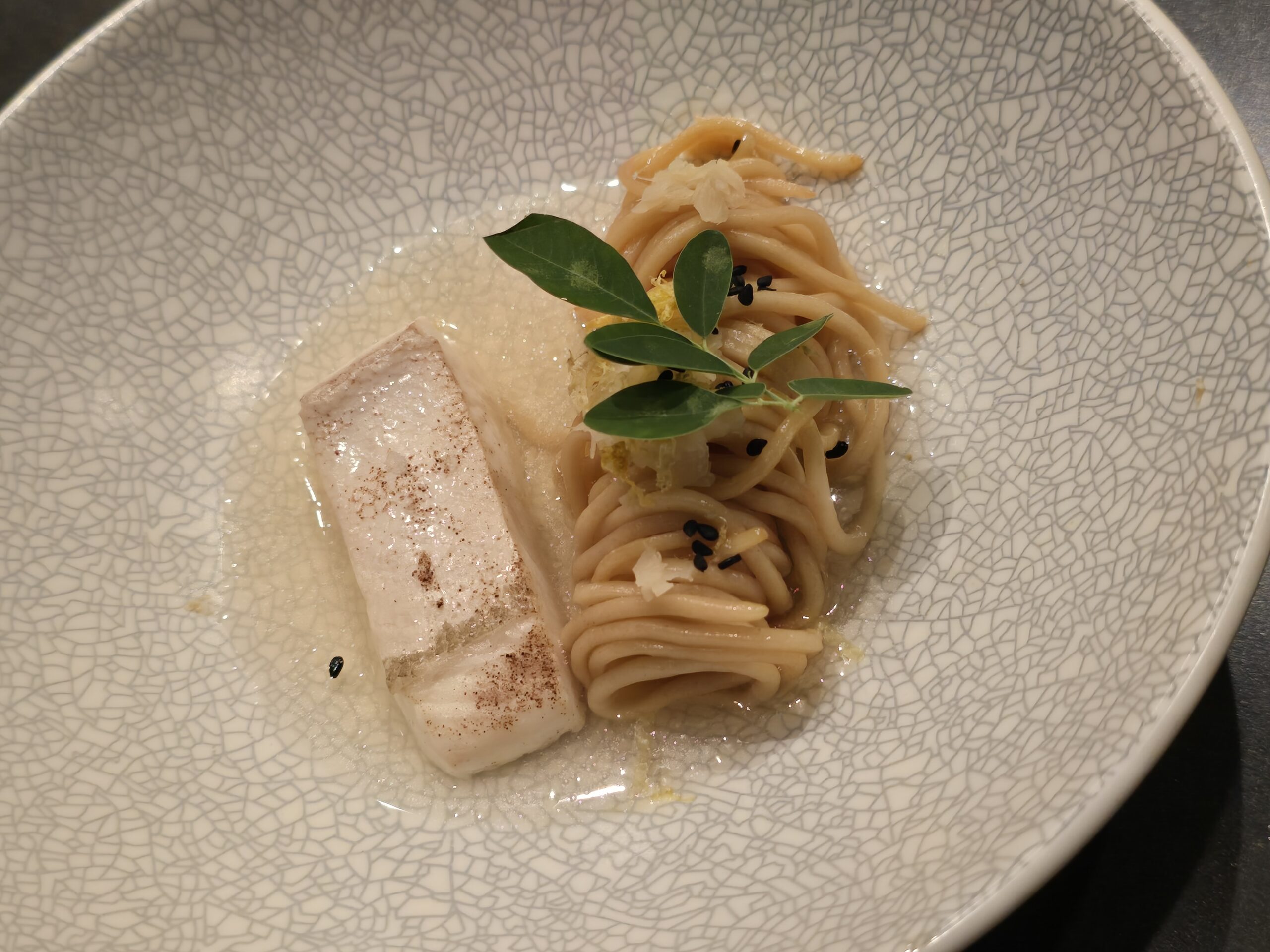
Yakimono came next, and if you Google the term you’ll find “meat on a stick.” Kosen’s version bore no resemblance. A lightly cooked, breaded slice of fish sat atop compressed honeydew melon turned nearly into jelly, finished with a whisper of infused jalapeño. Light fish, light honeydew gelatin, a touch of heat — I have no real comparison point for this dish other than to say it was excellent and worth seeking out.
The Entrées
Two cooked entrées closed out the savory portion of the evening.
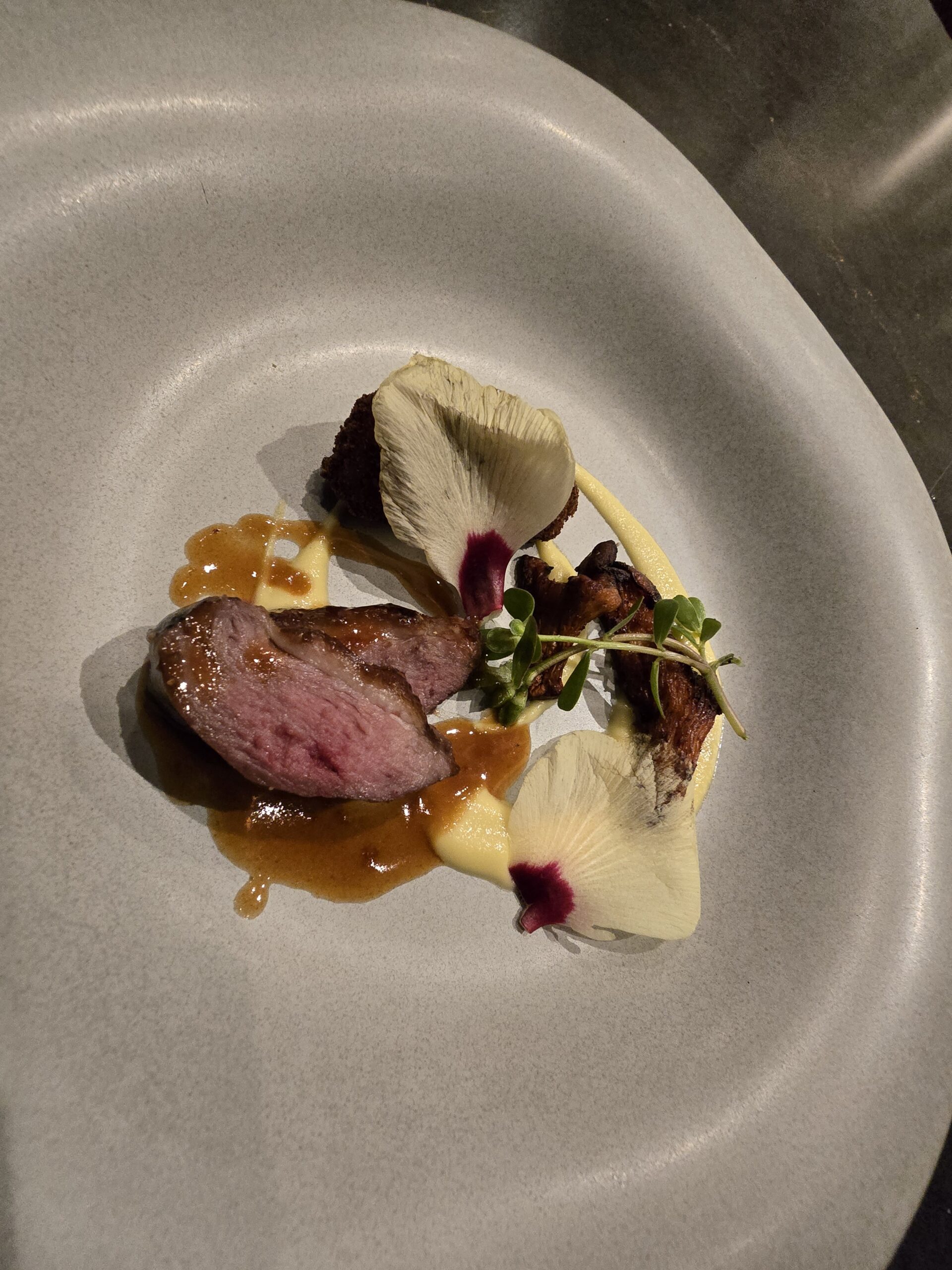
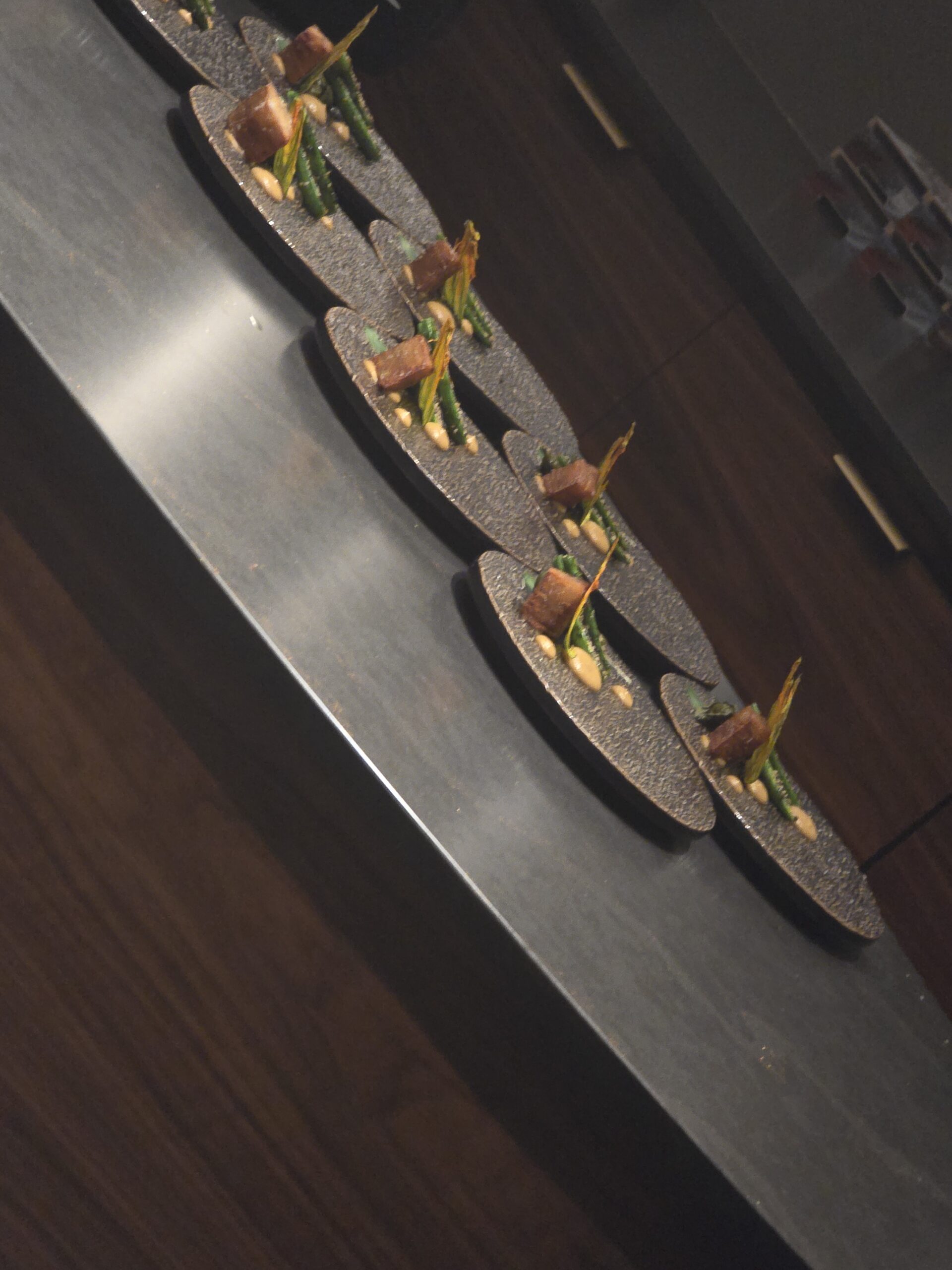
Duck, sourced from Our Family Farm / Jurgielewicz Duck, one of North America’s leading duck suppliers. Rather than Peking-style preparation, the chef served it medium rare — two small, exquisite slices. What looked like a hush puppy on the plate was actually a tiny fried green tomato, one bite. Thin-sliced, flash-fried chanterelle mushrooms sat beneath an okra blossom, and what appeared to be a yellow sauce was pureed summer squash. A combination of flavors I haven’t encountered anywhere else, and an entrée I could have eaten for days.
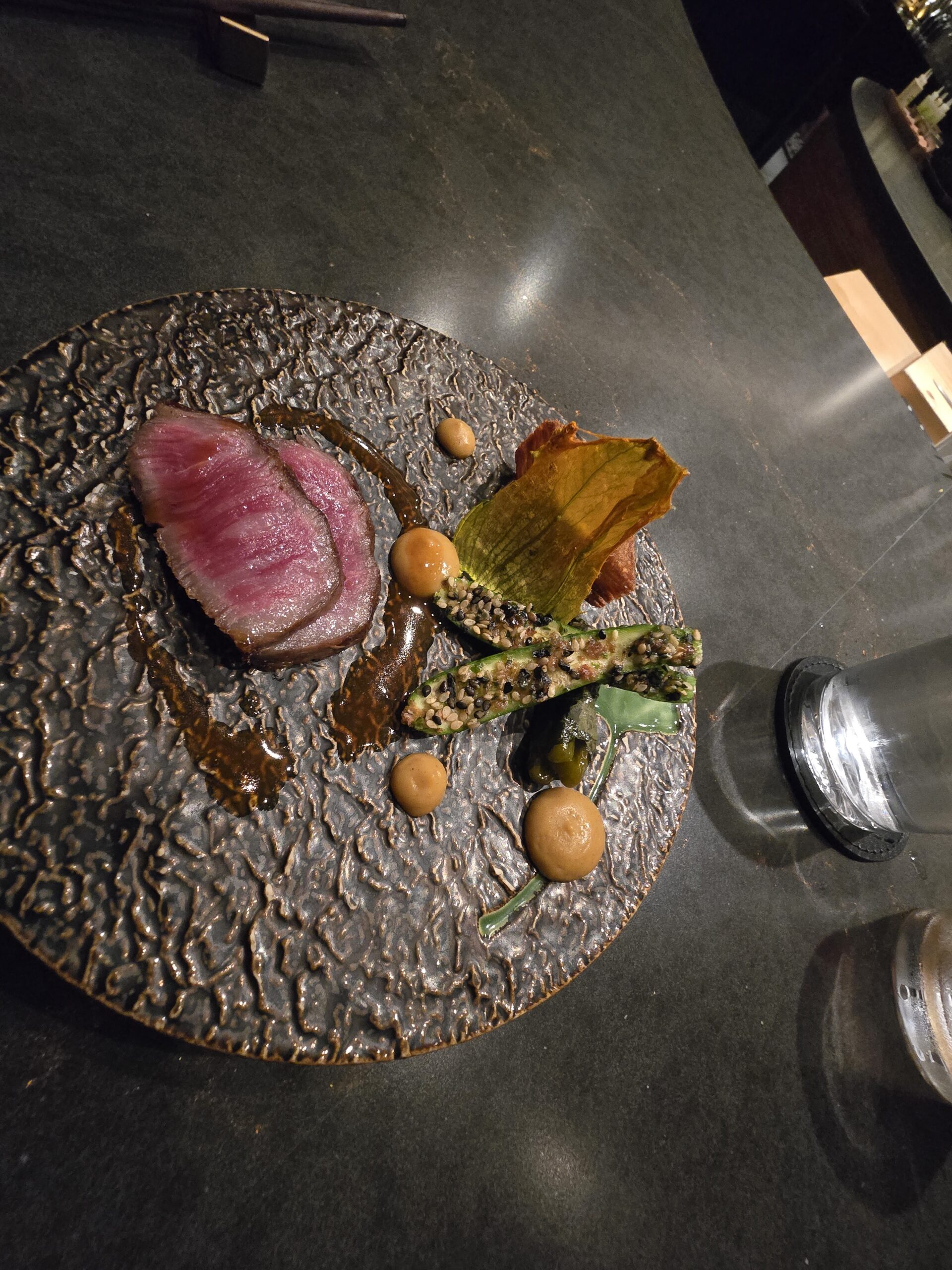
A5 Wagyu followed — beef raised in Japan’s Hokkaido province, renowned for exceptional marbling. If you’ve never had true Wagyu or Kobe beef, the closest comparison is the most tender filet mignon or pork tenderloin you’ve ever cut with a fork and barely had to chew — then take that another step further. It practically dissolves. Two slices were served with a “potato pavé,” one bite, baked and then fried rather than twice-baked. Stuffed zucchini, filled partly with chopped zucchini flower, added texture and flavor. Stuffed shishito peppers brought just enough heat without overwhelming the dish. And the small drops that looked like cheese on the plate were, in fact, pureed corn — not what the eye expects at all.
Dessert
Two courses closed the night.
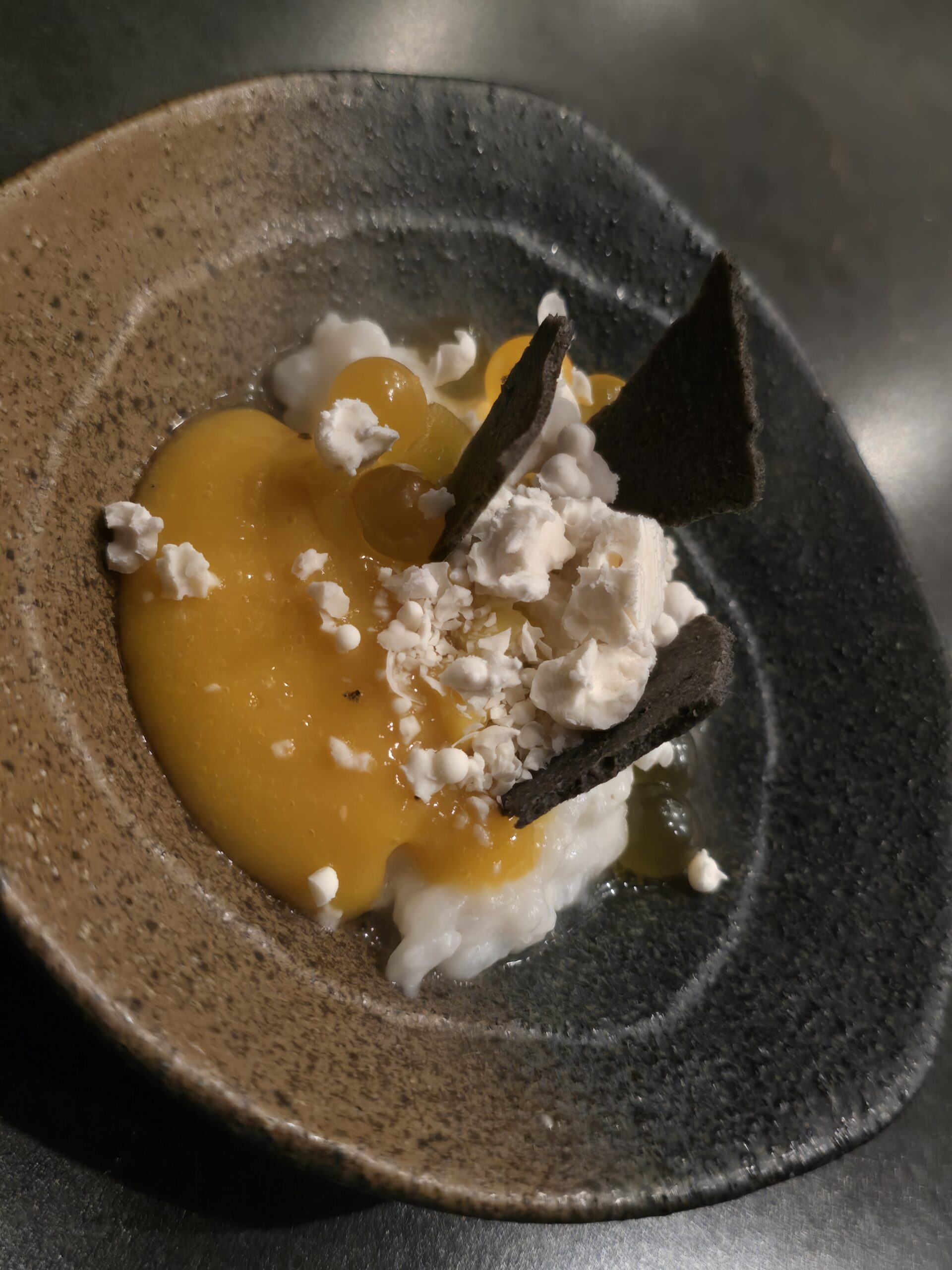
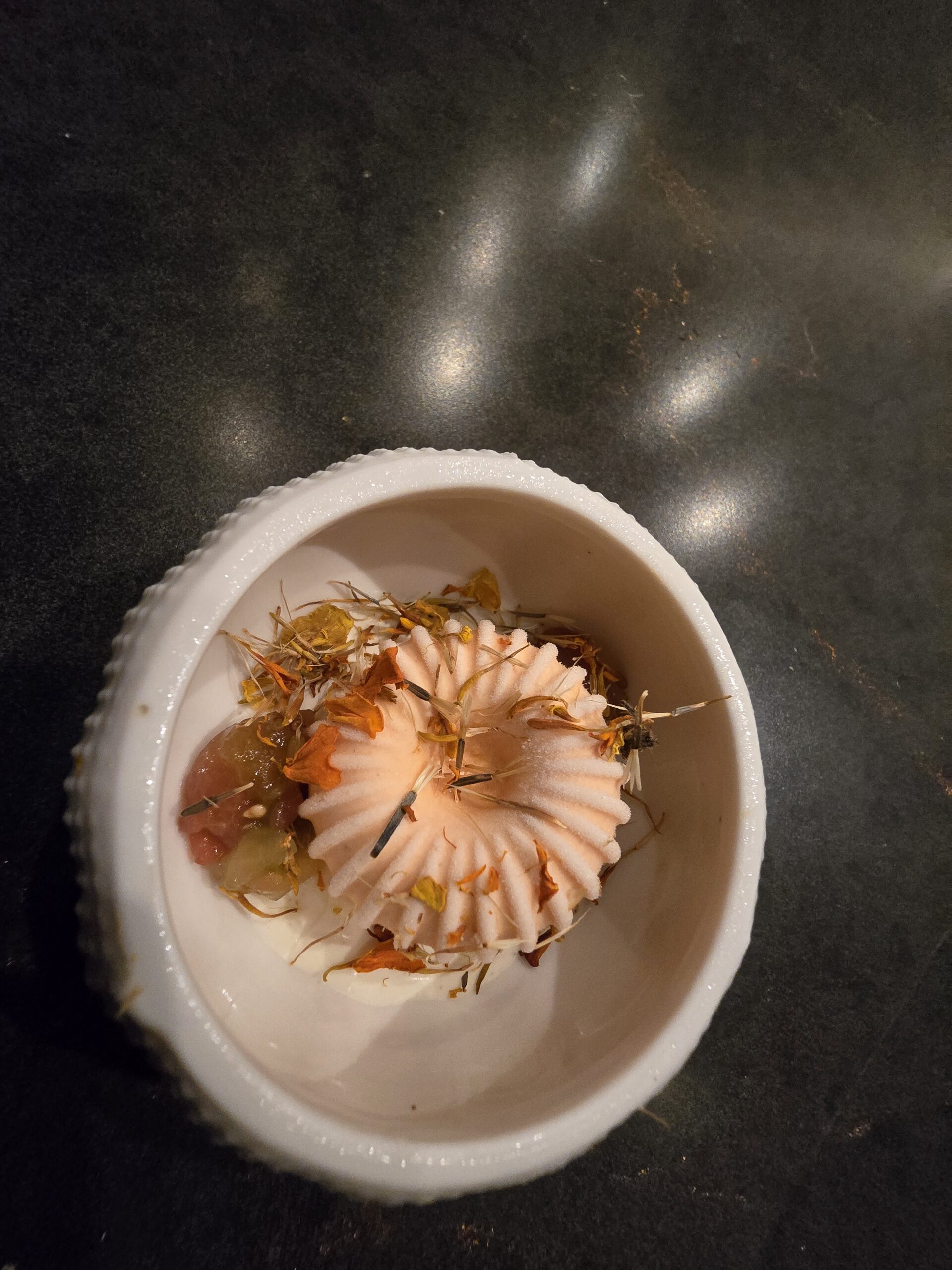
The first, described by the chef as the transition from savory into full dessert, was the Panna Cotta — tomato and red bell pepper. What arrived was, I believe, a previously frozen panna cotta, lighter than ice cream and textured somewhere between the two, infused with what tasted like peach and mango. The relish and dry spices surrounding it were built from pureed tomato and bell pepper — savory vegetables reduced down and paired against the sweet base. Savory vegetables, turned nearly gelatinous, paired against sweet panna cotta — a combination that left me wanting more, and a reminder that balance applies to dessert courses just as much as savory ones.
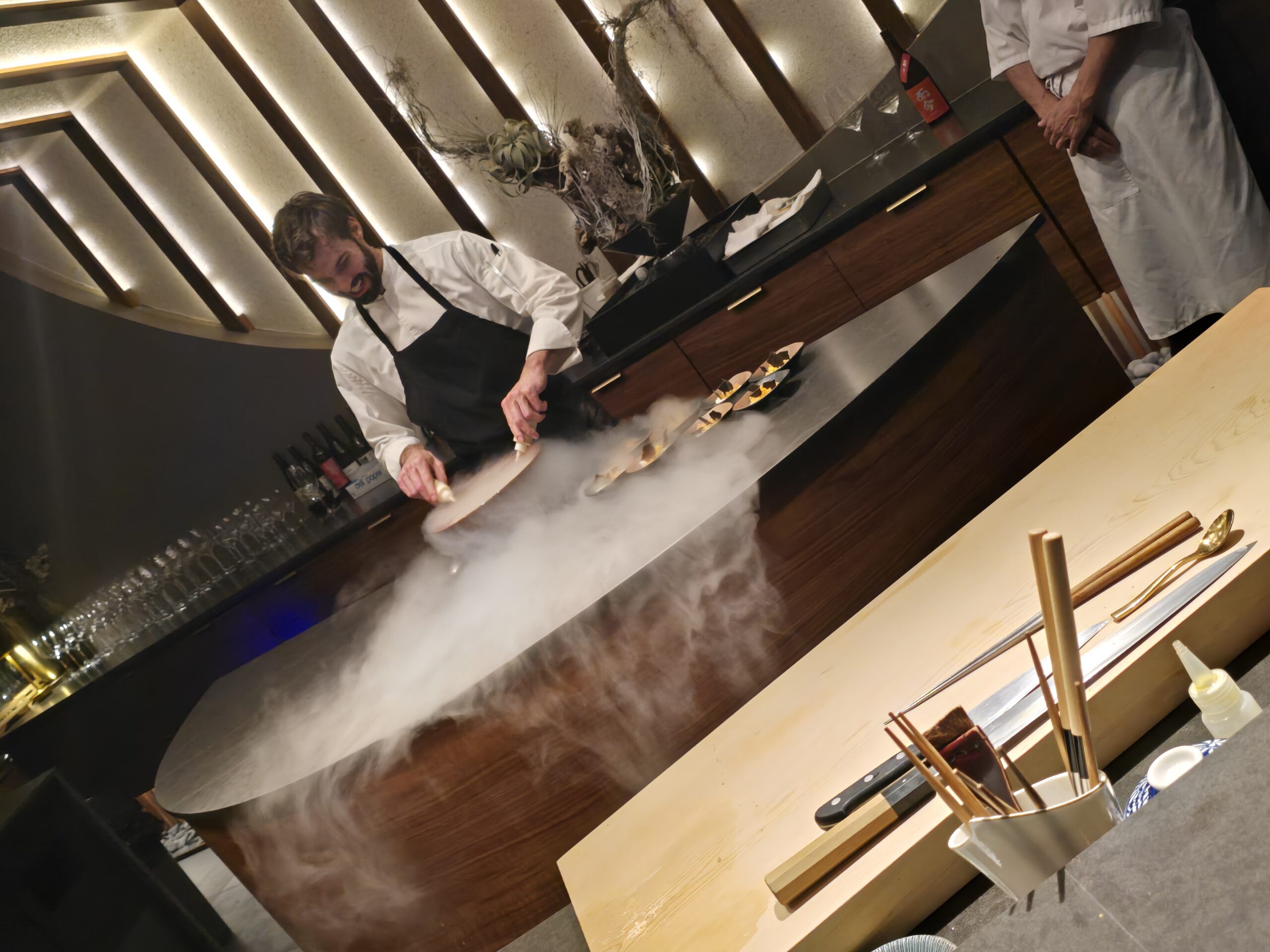
The final course, Khao Neow Ma Muang, combined passionfruit and black sesame. Dry ice steam rolled out of the bowl as the chef finished it tableside. One of my fellow diners compared it to Dippin’ Dots; the chef, entirely unbothered, later announced the course as “our Khao Neow Ma Muang, served with Dippin’ Dots,” to general laughter. Underneath the theater, the frozen elements balanced the dish’s sweetness and made for a genuinely great finish.
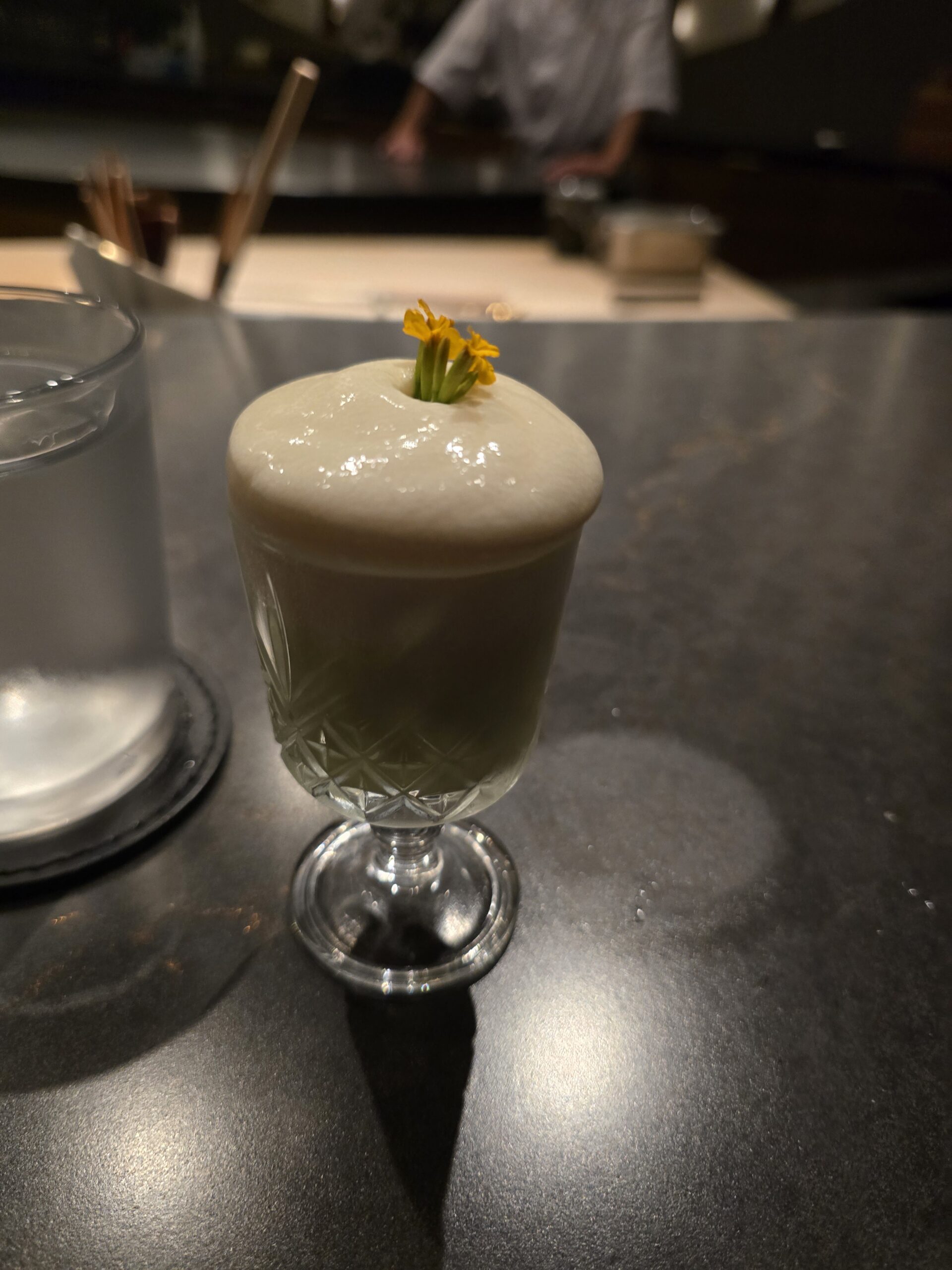
The very last thing served was the Yogurt & Fennel — nonalcoholic, poured into a shot glass, and all anyone needed at that point. Hojicha tea, Greek yogurt, dill, and fennel, topped with what I can only describe as cream cheese turned into foam. Cream cheese, foamed, on top of tea. I’m still thinking about that one.
The Company at the Counter
All evening, seated to my right, were two women visiting from Washington, D.C. on a business trip. About two-thirds of the way through the evening they started getting full — worth remembering that every course was one or two bites, and yet by that point everyone at the counter was thoroughly stuffed. Politely, almost sheepishly, one of them asked if I’d like to finish some of what they couldn’t. I was not about to say no to more food from a kitchen this good, and once I accepted, we spent the rest of the evening in good conversation.
They weren’t on the alcohol-free menu, so they got progressively more entertaining as the night went on. By the end, when the rest of the room had cleared out and it was just the three of us chatting with the two chefs and the sommelier, Zach, the sommelier asked one of the women if she’d like anything else to drink — something off-menu, since it was clear the kitchen wasn’t quite ready to let the evening end. Her colleague immediately answered for her: “Oh, I think we’ve had enough.” She turned, looked at her colleague, and said, “Excuse me — he was talking to me, not you.” The table erupted. The sommelier, without missing a beat, went and fetched her another drink.
Talking New Orleans
Chef Alex, whose training runs through classical French and Nordic cuisine — including time at the Michelin-starred Beckon in Denver — has worked at other Michelin-starred restaurants before landing at Kosen, but, ironically for someone with his background, he’d never been to New Orleans, arguably the most French-influenced city in the country. He mentioned it was on his list. Since I’ve been many times, we spent a good stretch of the evening talking through the city’s restaurant scene. He’s looking forward to some recommendations, which I’ll save for a New Orleans review of my own.
The Room
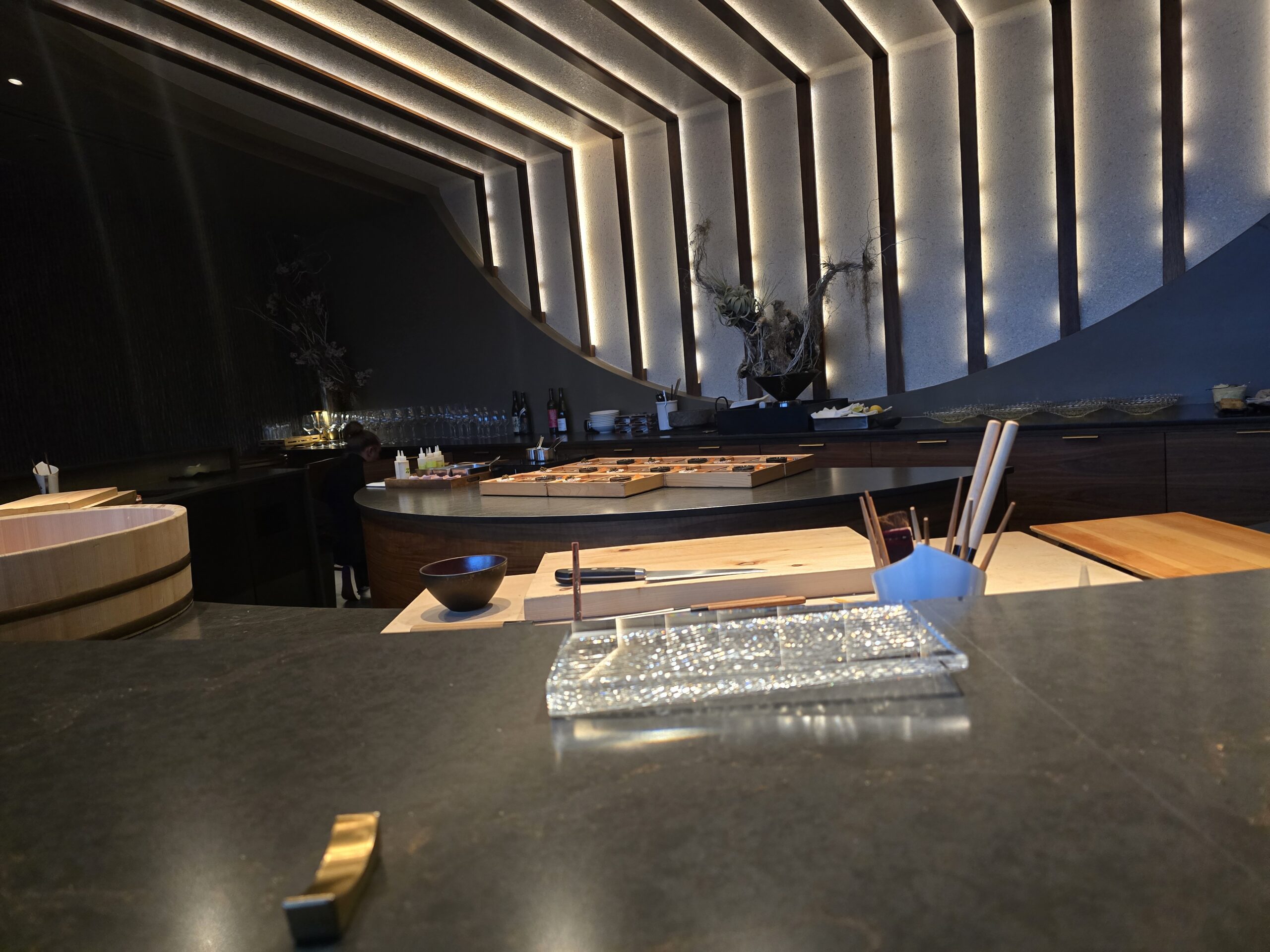
The service was spectacular — a small army of staff attentive to everything. Two swallows out of your water glass, and it was refilled. A few grains of rice on the counter, wiped immediately. The dining space stayed immaculately clean from the first minute to the last.
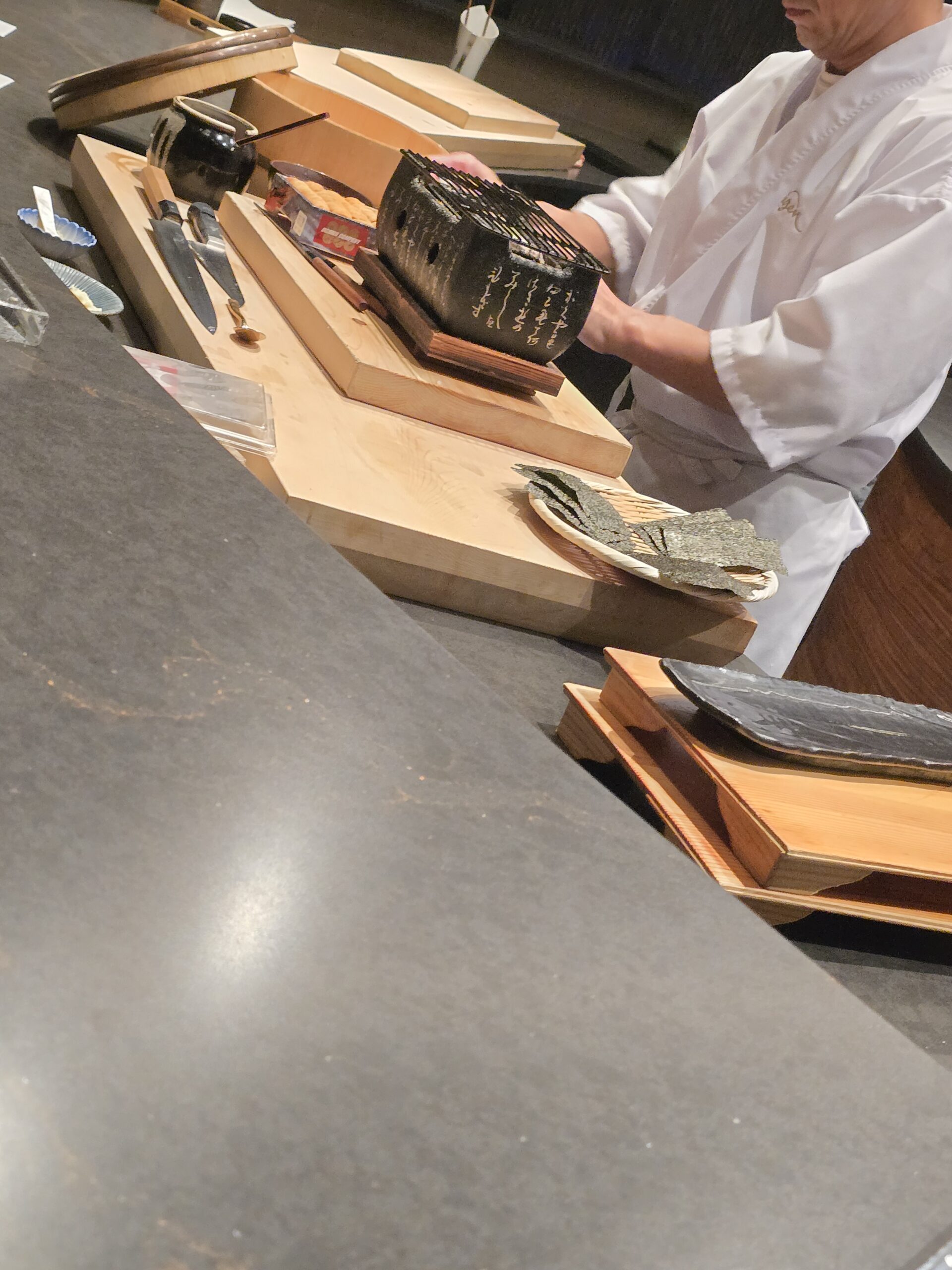
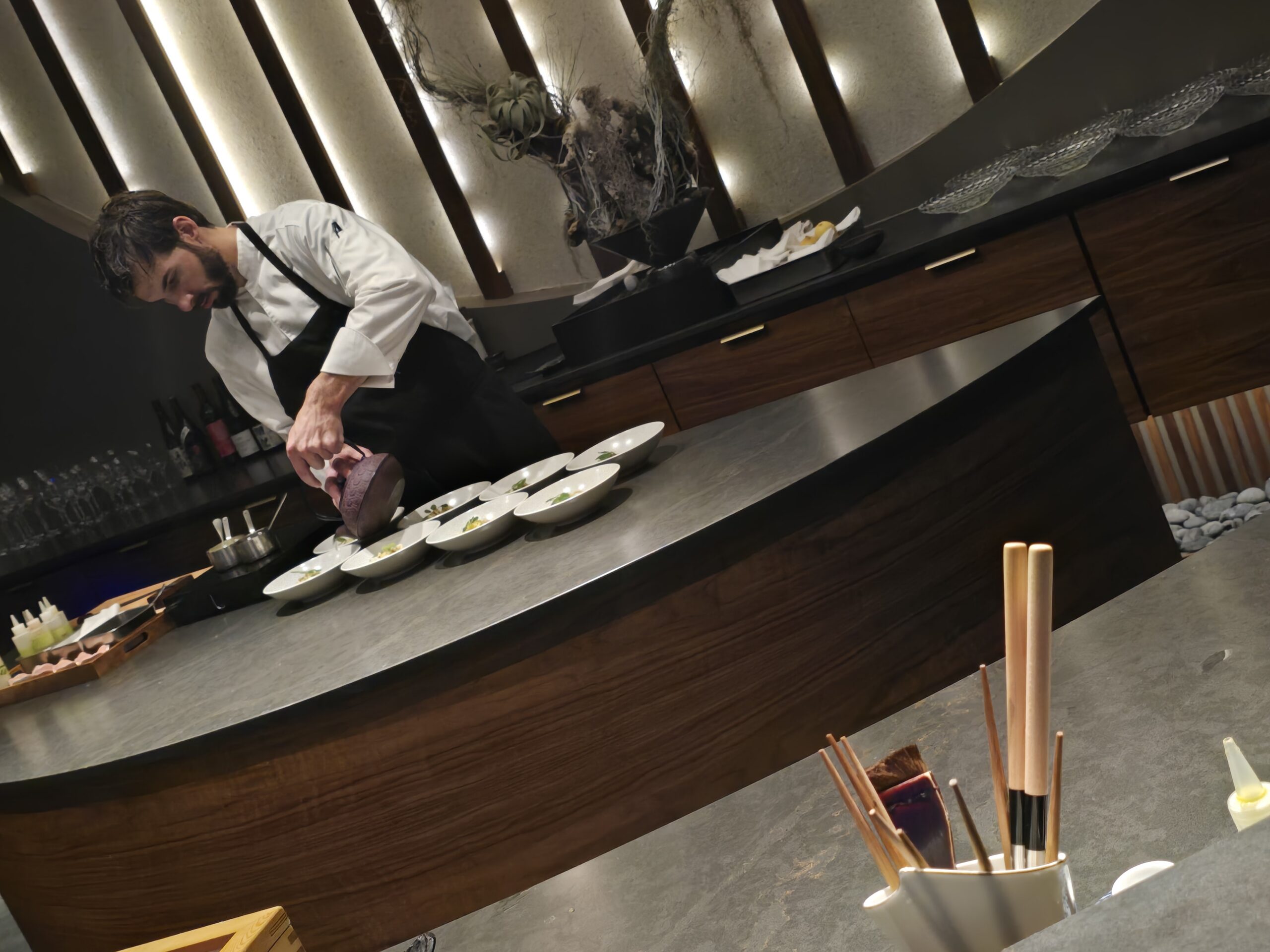
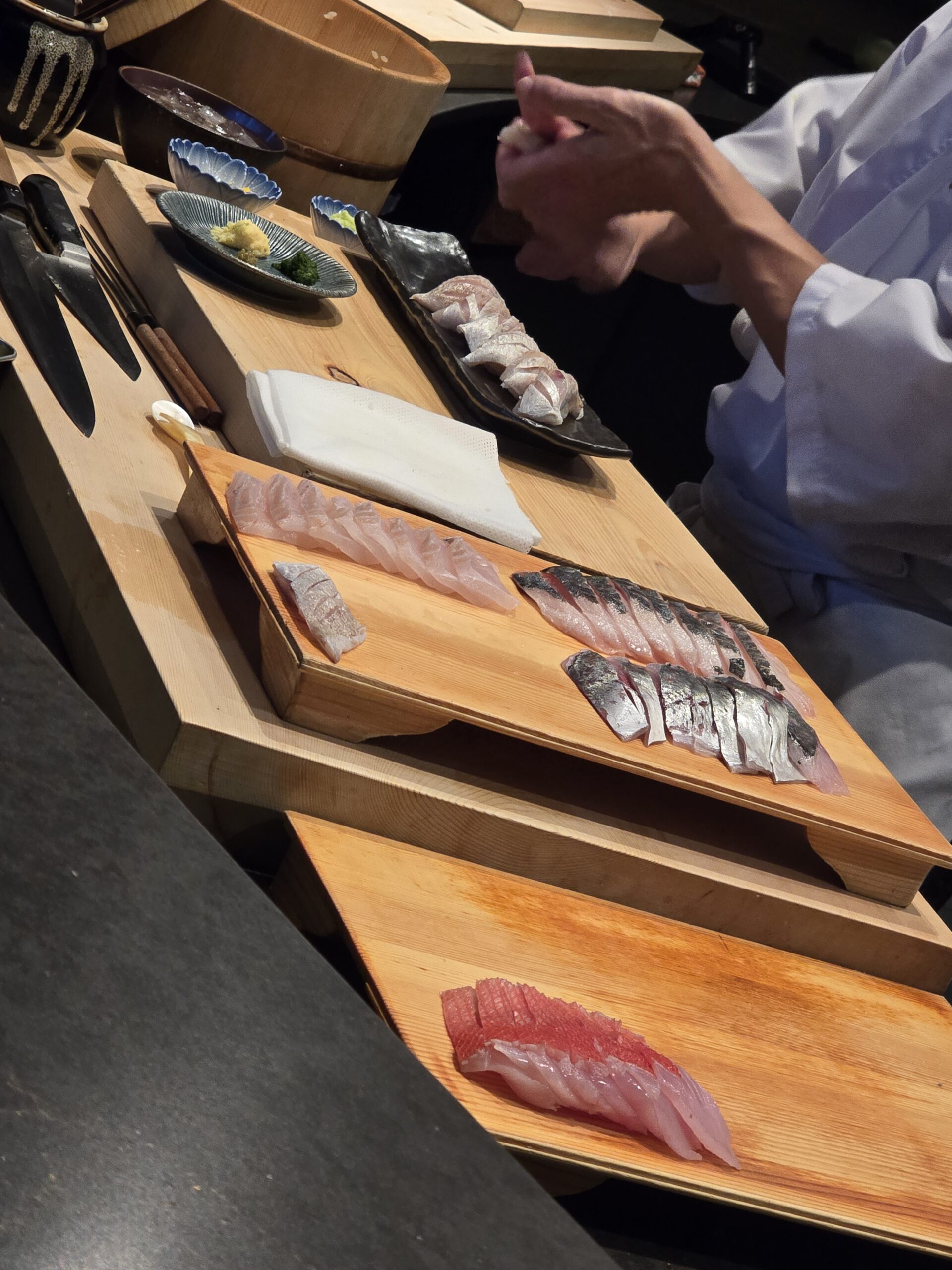
Watching the sushi chef work in front of you, the care was obvious — he’d occasionally slice a piece, inspect it, and discard it without hesitation if it wasn’t right. Nobody at Kosen is worried about the cost of a rejected piece of fish; they’re worried about the experience. There were two chefs working the counter — Executive Chef Andrew Huang, a 23-year sushi veteran who previously served as Head Chef at Uchiko in both Houston and Miami, and didn’t speak much English, which somehow only added to the authenticity of the whole thing, alongside Chef Alex, running point on the French-influenced elements of the menu. Neither chef handed a finished plate directly to a guest, even sitting a few feet away; each dish passed to a server first, who then placed it in front of the diner. Small choreography like that tells you how much thought went into every detail.
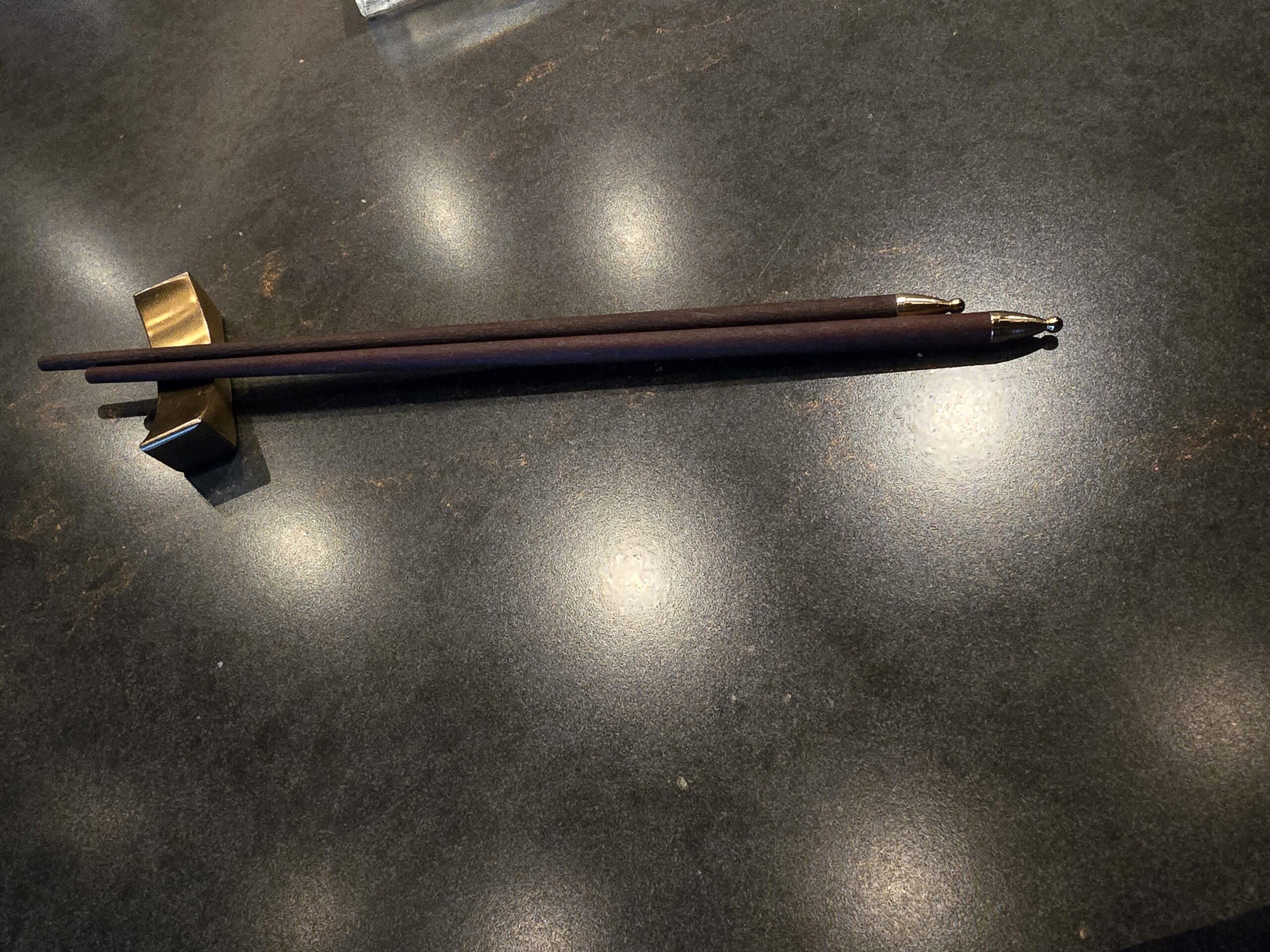
When you sit down, you choose your chopsticks — all identical wooden lengths, but each topped with a different ornamental design, like picking your token in a board game. Some of the plates weren’t simply white ceramic either; one had a bubbled texture you could feel under your fingers. The rectangular glass plate used for a single nigiri course had been sculpted to resemble fish scales, and being transparent, caught and scattered light as it sat on the counter.
The Chefs
Andrew Huang, Executive Chef, brings 23 years in the sushi industry to the counter. Originally from Taiwan, he trained in Japan before serving as Head Chef at Uchiko in both Houston and Miami, and his Japanese and Taiwanese roots run through everything he puts in front of you.
Chef Alex grew up in Tampa and built his foundation in classical French and Nordic cuisine, including time at the Michelin-starred Beckon in Denver. His focus on sustainability and seasonal ingredients — and the French technique behind dishes like the Hassun’s brioche — comes through clearly on Kosen’s menu.
One Last Sweet Note
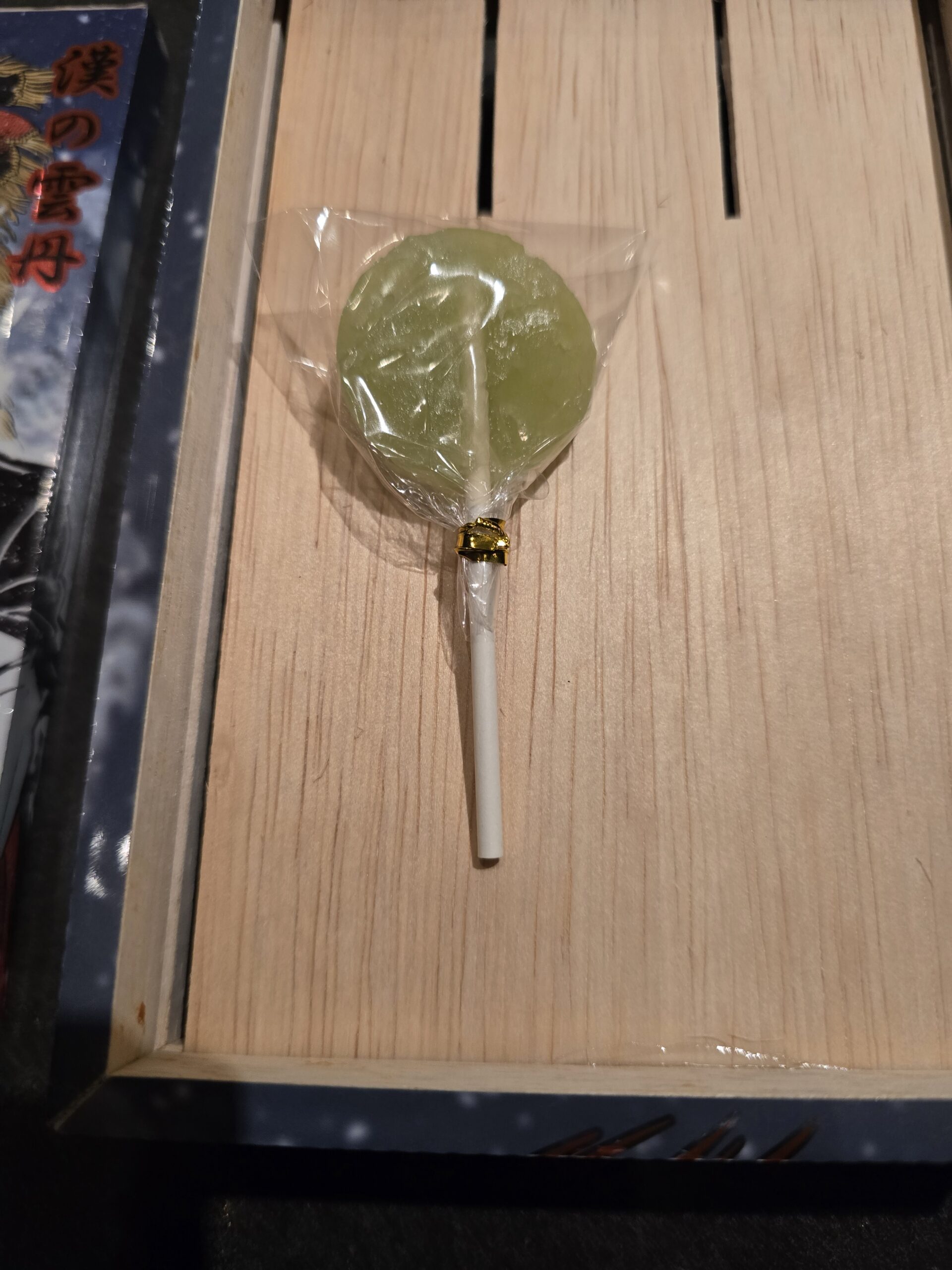
The check arrived with a final touch: instead of the usual mint, Kosen sends the bill out with a house-made lollipop flavored with pandan syrup. A small thing, but the kind of small thing that tells you the attention to detail never lets up, right down to the very last moment of the meal.
The Verdict
It’s difficult to find anything that went wrong that night. The food quality was excellent, and — more importantly — it was unique. Plenty of restaurants serve genuinely great food that isn’t especially distinctive; a fantastic plate of spaghetti and meatballs is still just a fantastic plate of spaghetti and meatballs. A Michelin-starred kitchen needs to combine top-tier execution with real originality, and Kosen did both, consistently, for ten-plus courses.
The service was great. The atmosphere was great. And even limited to the nonalcoholic pairing, the drink program was the best I’ve encountered anywhere. I’m already looking forward to returning and trying the alcoholic side of the menu — their sake list alone, with its range of flavors, had me practically salivating just reading it.
Was it expensive? Absolutely — dinner for one, with service, ran around $500. Was it worth it? Also absolutely. This is exactly the kind of experience a Michelin star should deliver. Nothing was forgotten. Save it for a special occasion, and go.
The Menu
Kosen — Tampa, FL Cuisine: Japanese (Omakase) Michelin Star: ⭐ (1 Star) Rating: ⭐⭐⭐⭐⭐